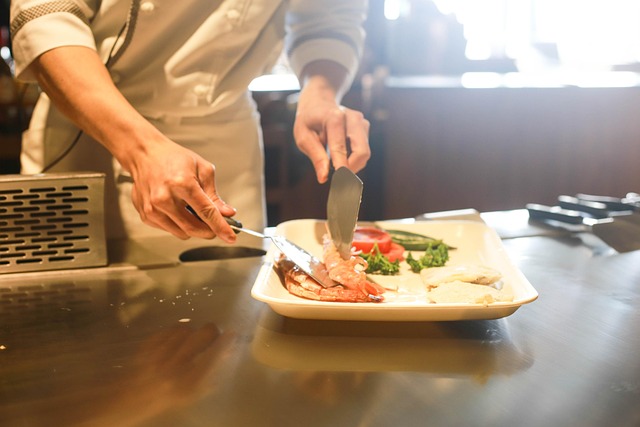
Today’s Japanese word is 屋台(yatai).
You may see it translated as “food stall,” “street stall,” “festival booth,” or even “festival float.” How can one word describe all of those things? The answer is hidden in the image of a small roofed platform.
- 1 What Does Yatai Mean in Japanese?
- 2 Yatai in Kanji: 屋 + 台
- 3 How to Pronounce Yatai
- 4 How Is Yatai Written?
- 5 Yatai vs. Demise vs. Roten
- 6 Two Major Types of Food Yatai
- 7 Why Is Fukuoka Famous for Yatai?
- 8 Where Are Fukuoka’s Yatai?
- 9 What Time Do Fukuoka Yatai Open?
- 10 What Food Can You Eat at a Yatai?
- 11 Yatai Etiquette in Fukuoka
- 12 Useful Japanese Phrases at a Yatai
- 13 Example Sentences with Yatai
- 14 Yatai in Anime and Japanese Festivals
- 15 Yatai FAQ
- 16 Yatai Meaning: Summary
What Does Yatai Mean in Japanese?
Yatai(屋台/やたい) most commonly means a small roofed stall used to sell food or other goods. It may be portable, movable, assembled temporarily, or operated in a fixed evening location.
Depending on context, yatai can also refer to an ornate platform or float used in a festival procession. Japanese dictionaries record both meanings.
Festival meaning: a decorated platform or float carrying musicians, performers, or sacred objects
Core image: a small roofed structure built on a platform
Yatai in Kanji: 屋 + 台
The spelling helps learners remember the physical image:
台(たい/tai) = stand, platform, base, or counter
屋台(yatai) = a roofed stand or platform
This breakdown is a useful memory aid. Historically, the word has referred to small house-shaped platforms, including festival structures, and later to simple roofed commercial stalls.
So the food-stall meaning and the festival-float meaning are not random homonyms? They share the same physical idea?
Exactly. Picture a little “house” sitting on a “platform.”
One version carries performers or decorations through a festival. Another version becomes a tiny shop where someone cooks and sells food. The purpose changes, but the basic structure connects the meanings.
How to Pronounce Yatai
Japanese: やたい
Romanization: yatai
Beginner sound guide: yah-tah-ee
The final ai should not become the English word “eye” in one compressed beat. Japanese rhythm treats it as ta-i, two timing units.
How Is Yatai Written?
Hiragana: やたい
Katakana: ヤタイ
The standard spelling is 屋台. Katakana may appear in logos or stylish tourism materials, but it is not the normal dictionary spelling.
Yatai vs. Demise vs. Roten
Several Japanese words can be translated as “stall,” but they are not completely interchangeable.
屋台(yatai)
A small roofed stall, often associated with prepared food, festivals, night streets, or portable structures.
出店(demise)
A temporary stall at a shrine festival, fair, or event. The same kanji can be read shutten in a different context, meaning opening a shop or exhibiting at an event.
露店(roten)
An open-air stall. This is a broader and slightly more formal term that emphasizes outdoor selling.
キッチンカー(kitchin ka)
A modern food truck. This word is more appropriate for a vehicle equipped as a mobile kitchen.
Fukuoka’s famous evening stalls: yatai
Modern food truck: kitchin ka
General formal term for an outdoor stall: roten
Two Major Types of Food Yatai
1. Festival yatai
At a matsuri, temporary yatai line streets around a shrine, temple, park, or parade route. They may sell takoyaki, yakisoba, grilled skewers, candied apples, shaved ice, cotton candy, and toys.
These stalls are tied to the event. They appear for a limited period, serve crowds, and disappear after the festival.
2. Evening dining yatai
In places such as Fukuoka, yatai are compact evening restaurants. Customers sit on stools around a counter and order ramen, oden, yakitori, tempura, drinks, or more creative dishes.
This type is not simply a takeaway booth. It can feel like a tiny open-air izakaya where the owner cooks directly in front of a small group of customers.
I imagined grabbing food and walking away. At a Fukuoka yatai, do people actually sit down for a meal?
Yes. That is one of the biggest differences.
Many Fukuoka yatai have only a handful of seats around the counter. You sit close to the cook and other customers, order several small dishes, and enjoy the conversation as part of the experience.
Why Is Fukuoka Famous for Yatai?
Fukuoka has preserved one of Japan’s best-known urban yatai cultures. The city’s official tourist guide says that more than one hundred stalls open around the city after dusk, offering dishes such as ramen, oden, gyoza, yakitori, and tempura.
Modern yatai culture expanded after World War II, when black-market stalls became common during food shortages and economic hardship. Later, health and safety restrictions reduced food-stall culture in many Japanese cities. Vendors in Fukuoka successfully worked to protect the tradition, and today the municipal government oversees the stalls through rules and support related to hygiene, water, electricity, and community impact.
This combination—historic continuity, regulation, and a strong local food identity—made Fukuoka the city most closely associated with yatai.
Where Are Fukuoka’s Yatai?
The best-known concentrations are in and around:
- Nakasu, especially along the river
- Tenjin, a major shopping and nightlife area
- Nagahama, known for ramen culture
Locations and operating days can change. Weather, the owner’s health, or local conditions may affect whether an individual stall opens. Check Fukuoka’s official yatai map and current information rather than assuming every stall operates every evening.
What Time Do Fukuoka Yatai Open?
Many begin operating at around 6:00 p.m., after the stall has been moved or assembled and preparations are complete. Closing time varies by stall and customer traffic.
Bad weather can prevent a stall from opening. Because the structure is small and partly exposed, heavy rain or strong wind matters more than it would for a permanent restaurant.
What Food Can You Eat at a Yatai?
Classic choices include:
- Hakata ramen — thin noodles in pork-bone broth
- Oden — ingredients simmered in dashi
- Yakitori — grilled skewers
- Gyoza — pan-fried dumplings
- Tempura — battered and fried seafood or vegetables
- Mentaiko dishes — foods using spicy cod roe
- Alcohol — beer, shochu, sake, and highballs
Modern stalls may also serve French food, international dishes, coffee, desserts, or original menus. “Yatai food” describes the setting more than one fixed cuisine.
Yatai Etiquette in Fukuoka
Go in a small group
Seating is limited. A large group may be difficult or impossible to accommodate together.
Do not stay too long when people are waiting
Yatai are intimate, but they also depend on seat turnover. Enjoy your meal without treating the limited counter as an all-night private table.
Check the menu and prices
Look at posted information and ask before ordering if anything is unclear.
Expect shared space
You may sit shoulder-to-shoulder with strangers. That closeness is part of yatai culture.
Follow the owner’s guidance
Each stall has its own system for seating, ordering, payment, and placing belongings.
A yatai is not a miniature chain restaurant. It is closer to entering the owner’s tiny working space. Be flexible, order clearly, keep your belongings compact, and respect the customers waiting outside.
Useful Japanese Phrases at a Yatai
二人です。
Futari desu.
“There are two of us.”
空いていますか。
Aite imasu ka?
“Do you have space?”
おすすめは何ですか。
Osusume wa nan desu ka?
“What do you recommend?”
ラーメンを一つお願いします。
Ramen o hitotsu onegai shimasu.
“One ramen, please.”
お会計をお願いします。
Okaikei o onegai shimasu.
“The bill, please.”
Example Sentences with Yatai
祭りにはたくさんの屋台が出ています。
Matsuri ni wa takusan no yatai ga dete imasu.
“There are many stalls at the festival.”
屋台でたこ焼きを買いました。
Yatai de takoyaki o kaimashita.
“I bought takoyaki at a food stall.”
福岡の屋台でラーメンを食べたいです。
Fukuoka no yatai de ramen o tabetai desu.
“I want to eat ramen at a Fukuoka yatai.”
雨なので、今日は屋台が休みかもしれません。
Ame nanode, kyo wa yatai ga yasumi kamo shiremasen.
“Because it is raining, the yatai may be closed today.”
Yatai in Anime and Japanese Festivals
Festival yatai are a familiar anime setting. A typical summer-festival scene includes yukata, fireworks, goldfish scooping, masks, and stalls selling takoyaki, yakisoba, candied apples, and shaved ice.
In these scenes, yatai usually means temporary festival booths rather than Fukuoka-style seated evening restaurants. Context tells you which meaning is intended.
Yatai FAQ
Does yatai mean “street food”?
It literally refers to the stall or structure. English often uses “street food” when describing the food sold there.
Are all yatai movable?
Many are movable or assembled temporarily, but the practical setup varies. Fukuoka stalls operate in designated locations and are packed away after business.
Is yatai the same as a food truck?
No. A food truck is normally called kitchin ka. A yatai is generally a smaller stall or cart-like structure.
Are Fukuoka yatai open every night?
Not necessarily. Weather, holidays, and the owner’s circumstances can affect opening. Check current official information.
Can tourists use yatai?
Yes. Fukuoka actively promotes yatai to visitors, but tourists should follow the stall’s rules and basic etiquette.
Which Stall Word Fits What You Saw?
The article lists four related words — yatai, demise, roten, and kitchin ka — that overlap but are not interchangeable. Answer these to pick the right one.
A modern food truck.
Demise especially suits a shrine-fair stall.
The Fukuoka-style evening yatai culture.
Broader term, emphasizes selling outdoors.
The image most people picture first.
※ Based on the four-word comparison and two-types-of-yatai sections above, not a strict dictionary rule.
Yatai Meaning: Summary
● The same word can also refer to a decorated festival platform or float.
● The kanji image is 屋, roof or shop, plus 台, stand or platform.
● Festival yatai are temporary booths; Fukuoka yatai are often tiny seated evening restaurants.
● Fukuoka preserved and now regulates a major yatai culture with roughly one hundred stalls across the city.
● The word refers to the stall—not one particular kind of food.
The key to yatai is not “street” and not even “food.” It is the image of a small roofed platform that becomes a temporary world of its own.
At a festival, it may sell sweets for five minutes of fun. In Fukuoka, it may become a tiny restaurant where strangers share a counter and conversation.
Learn the foods sold at stalls in Japanese Street Food Words: A Beginner’s Guide.