- 1 Setsubun Meaning: Why Japan Throws Beans at Oni
- 1.1 What Does Setsubun Mean?
- 1.2 Setsubun Pronunciation, Kanji, Hiragana, and Katakana
- 1.3 When Is Setsubun?
- 1.4 Is Setsubun a National Holiday?
- 1.5 Why Were Seasonal Boundaries Considered Dangerous?
- 1.6 The Origin of Setsubun and Tsuina
- 1.7 What Is an Oni?
- 1.8 What Is Mamemaki?
- 1.9 How to Do Setsubun Bean Throwing
- 1.10 “Oni wa Soto! Fuku wa Uchi!” Meaning
- 1.11 Why Are Beans Used?
- 1.12 Why Do People Eat Their Age in Beans?
- 1.13 What Is Ehomaki?
- 1.14 What Is the Lucky Direction?
- 1.15 Hiiragi Iwashi: Holly and Sardine Heads
- 1.16 Setsubun at Temples and Shrines
- 1.17 Regional Variations
- 1.18 Setsubun Vocabulary
- 1.19 Setsubun Example Sentences
- 1.20 Setsubun in Anime and Pop Culture
- 1.21 How to Celebrate Setsubun Outside Japan
- 1.22 Common Misunderstandings
- 1.23 From Four Setsubun Days to One
- 1.24 Why the Date Sometimes Changes
- 1.25 The Meaning of Inside and Outside
- 1.26 Different Setsubun Chants
- 1.27 Who Throws the Beans?
- 1.28 Setsubun and Yakuyoke
- 1.29 Food Beyond Ehomaki
- 1.30 How Ehomaki Became Nationwide
- 1.31 Environmental and Food-Waste Questions
- 1.32 Setsubun for Families and Classrooms
- 1.33 Useful Grammar in the Setsubun Chant
- 1.34 Public Bean-Throwing Event Etiquette
- 1.35 How to Explain Setsubun in Simple English
- 1.36 Why the Ritual Still Feels Modern
- 1.37 Frequently Asked Questions
- 1.37.1 What does Setsubun mean in English?
- 1.37.2 Why do Japanese people throw beans?
- 1.37.3 What do people say during Setsubun?
- 1.37.4 Why are the beans roasted?
- 1.37.5 What is an ehōmaki?
- 1.37.6 Is Setsubun a national holiday?
- 1.37.7 Can tourists attend Setsubun events?
- 1.37.8 What is the difference between Setsubun and Lunar New Year?
- 1.38 Setsubun Meaning: Summary
Setsubun Meaning: Why Japan Throws Beans at Oni
Setsubun literally means “seasonal division.” Today it usually refers to the day before Risshun, the traditional beginning of spring, normally on February 3 but occasionally on February 2 or 4.
The best-known custom is mamemaki, throwing roasted soybeans while saying 鬼は外!福は内!—“Oni out! Fortune in!” People may also eat lucky beans, eat an uncut sushi roll called ehōmaki, or display holly leaves and a sardine head. Setsubun is not a national holiday.
What Does Setsubun Mean?
Setsubun is written 節分:
- 節(せつ/setsu): season, seasonal point, joint, division, or node;
- 分(ぶん/bun): division or part.
The literal meaning is therefore “division of the seasons” or “seasonal boundary.” In the traditional calendar, each of the four seasons begins with a day called:
- 立春(りっしゅん/Risshun): beginning of spring;
- 立夏(りっか/Rikka): beginning of summer;
- 立秋(りっしゅう/Risshū): beginning of autumn;
- 立冬(りっとう/Rittō): beginning of winter.
Originally, the day before each seasonal beginning could be called setsubun. Over time, the word came to refer especially to the day before Risshun because spring’s beginning functioned like the start of a new annual cycle.
Setsubun Pronunciation, Kanji, Hiragana, and Katakana
- Kanji: 節分
- Hiragana: せつぶん
- Katakana: セツブン
- Romaji: Setsubun
- Literal meaning: seasonal division
Pronounce it in four Japanese units: se-tsu-bu-n. The tsu should not disappear completely, although it may sound light in fast speech. English speakers should avoid saying “set-SOO-boon” with strong stress.
When Is Setsubun?
Setsubun is the day before Risshun. It usually falls on February 3, but the astronomical calculation behind the traditional seasonal points means it can fall on February 2 or, rarely, February 4.
This is why an evergreen article should not define Setsubun as permanently equal to February 3. For a current event listing, verify the year’s date. The festival is not based on “the first Saturday in February” or another simple modern weekday rule.
Is Setsubun a National Holiday?
No. Schools, offices, banks, and government services generally operate normally. Families may celebrate at home in the evening, while shrines and temples hold public bean-throwing events during the day or early evening.
Setsubun is a 年中行事(ねんちゅうぎょうじ/nenchū gyōji), an annual observance, rather than a 国民の祝日, a national holiday.
Why Were Seasonal Boundaries Considered Dangerous?
In older East Asian thought, boundaries were unstable. Changes of season, year, direction, and life stage could allow illness, misfortune, or harmful spiritual forces to enter. The transition from winter to spring was especially important because it stood near the old New Year cycle.
Setsubun rituals therefore work like a spiritual house cleaning. The family removes the accumulated trouble of the old season and prepares a protected space for the new one. The modern chant captures both movements: send evil out and bring fortune in.
The Origin of Setsubun and Tsuina
Setsubun’s history is connected with a Chinese-derived exorcism ritual called 追儺(ついな/tsuina). The ceremony entered Japan and became an imperial-court event during the Heian period. Performers drove away epidemic-causing or harmful spirits at a major calendrical boundary.
Over time, court ritual, folk beliefs about seasonal danger, agricultural symbolism, Buddhist and Shinto practice, and household customs influenced one another. By the Edo period, popular forms of Setsubun were widely established among ordinary people.
It would be too simple to say that one person “invented bean throwing” on a known date. The familiar modern celebration is the result of centuries of development.
What Is an Oni?
鬼(おに/oni) is often translated as demon, ogre, devil, or monster. None is perfect. In Japanese stories, oni are usually powerful humanoid beings with horns, fangs, clubs, and tiger-skin clothing. They may represent violence, disaster, disease, greed, anger, or forces outside social order.
During Setsubun, the oni is the visible form of invisible trouble. A family member wearing a paper mask gives children something concrete to drive away. The ritual can also become psychological: people name a personal “oni,” such as laziness, anger, or fear, that they want to remove from their hearts.
What Is Mamemaki?
豆まき(まめまき/mamemaki) literally means “bean scattering” or “bean throwing.” It is the central Setsubun custom.
Families traditionally use roasted soybeans called 福豆(ふくまめ/fukumame), “fortune beans.” A person throws beans out through an open door or window and into the room while saying the Setsubun chant. At public temple and shrine events, priests, celebrities, athletes, community leaders, or people born under the year’s zodiac sign may throw small packets of beans and prizes toward a crowd.
How to Do Setsubun Bean Throwing
- Prepare roasted soybeans or packaged Setsubun beans.
- Choose an entrance, room, or safe outdoor area.
- Throw beans outward while saying 鬼は外!
- Throw beans inward or invite fortune in while saying 福は内!
- Close the door after driving the oni out.
- Clean up and eat the appropriate number of fortune beans if following that custom.
Modern households adapt the ritual. Some use individually wrapped beans to simplify cleaning. Families with very young children or pets may use soft paper balls or other safe substitutes. The cultural point is the symbolic expulsion and welcome, not creating a dangerous floor covered with hard food.
“Oni wa Soto! Fuku wa Uchi!” Meaning
The standard chant is:
鬼は外!福は内!
Oni wa soto! Fuku wa uchi!
Oni out! Fortune in!
Word by word:
- 鬼: oni, demon or source of misfortune;
- は: topic marker;
- 外(そと): outside;
- 福(ふく): good fortune, blessing, happiness;
- 内(うち): inside.
English often adds verbs—“Get out” and “come in”—because Japanese omits them. The original is more like two forceful labels: “As for oni: outside! As for fortune: inside!”
Not every temple or region says the exact same phrase. Places with an oni-related deity or benevolent oni legend may avoid saying “oni out.” Local versions are part of the tradition, not mistakes.
Why Are Beans Used?
Several explanations overlap.
Beans as spiritually powerful grain
Grain was associated with life force and agricultural abundance. Soybeans could symbolically strike, purify, and transfer power to the person who later ate them.
Wordplay: mame and destroying evil
A popular explanation connects 豆(まめ/mame), “bean,” with 魔滅(まめ), “destroying evil,” or 魔目, “the eye of a demon.” These are cultural wordplays rather than ordinary spellings of the food.
Why roasted beans?
Roasted beans are traditionally preferred. One explanation says that raw beans scattered outside might sprout, symbolically allowing the expelled evil to return to life. Roasting also makes the beans edible after the ritual and easier to store.
Why Do People Eat Their Age in Beans?
After mamemaki, a person may eat one bean for each year of age, sometimes plus one extra for health in the coming year. This is called eating one’s 年の数(としのかず), “number of years.”
Some people count traditional Japanese age, some use current age, and others simply eat a small amount. The practice is symbolic, not a legal test. Public health and individual dietary needs take priority over consuming a mathematically exact pile of beans.
What Is Ehomaki?
恵方巻き(えほうまき/ehōmaki) is a thick, uncut sushi roll eaten at Setsubun while facing the year’s lucky direction, called 恵方(えほう/ehō).
The commonly taught method is:
- Face the lucky direction for that year.
- Hold the roll without cutting it, symbolizing unbroken good fortune.
- Make a wish.
- Eat the roll silently.
The custom was especially associated with the Kansai region before nationwide convenience-store and supermarket campaigns made it familiar across Japan. Today it is one of Setsubun’s most visible foods, but it is not as old or universal as the basic bean-throwing image.
What Is the Lucky Direction?
The ehō changes according to a traditional calendrical system. Stores and news articles announce it each year with directions such as east-northeast or south-southeast.
Use the current year’s reliable Japanese calendar or official promotional information. Do not copy a direction from an undated article. The direction is part of the ritual, while the deeper word 恵方 means the auspicious direction associated with the year’s deity of fortune.
Hiiragi Iwashi: Holly and Sardine Heads
Some households display 柊鰯(ひいらぎいわし/hiiragi iwashi): a roasted sardine head attached to a holly branch near the entrance.
The unpleasant fish smell is said to repel oni, while the sharp holly leaves prick their eyes. This creates a protective barrier combining smell and pain. The custom is regionally variable and far less universal in modern urban homes than beans or ehōmaki.
Setsubun at Temples and Shrines
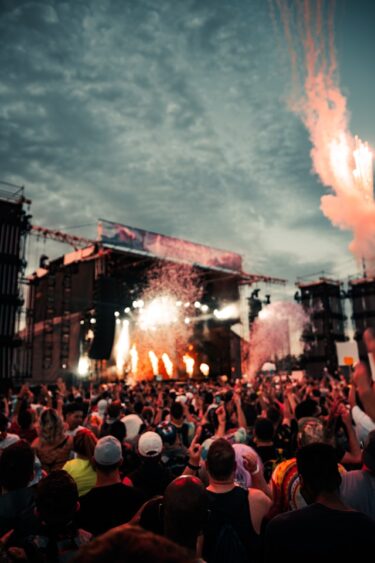
Public events are often called 節分会(せつぶんえ/setsubun-e). Large temples and shrines may build a stage and invite well-known guests to throw beans, sweets, or lucky packets. Crowds gather to catch them.
Check the event’s rules. Do not push, use an umbrella as a catching device, or enter restricted areas. Some events distribute packets calmly rather than throwing loose beans. Religious institutions may also conduct prayers and ceremonies beyond the public spectacle.
Regional Variations
Setsubun changes across Japan. Some areas throw peanuts because they are easier to find and clean up, especially in snowy regions. Some families say only Fuku wa uchi. Certain temples welcome oni connected with local legends. Foods can include soba, sardines, konnyaku, or regional dishes as well as ehōmaki.
This variation teaches an important rule for Japanese culture articles: explain the mainstream pattern first, then clearly say that local customs differ.
Setsubun Vocabulary
| Japanese | Reading | Meaning |
|---|---|---|
| 節分 | setsubun | seasonal division; Setsubun |
| 立春 | risshun | traditional beginning of spring |
| 鬼 | oni | oni, demon, ogre |
| 福 | fuku | fortune, blessing |
| 豆まき | mamemaki | bean throwing |
| 福豆 | fukumame | fortune beans |
| 恵方 | ehō | lucky direction |
| 恵方巻き | ehōmaki | lucky-direction sushi roll |
| 邪気 | jaki | evil influence, harmful energy |
| 厄払い | yakubarai | ritual removal of misfortune |
Setsubun Example Sentences
節分に豆まきをしました。
Setsubun ni mamemaki o shimashita.
We threw beans at Setsubun.父が鬼のお面をかぶりました。
Chichi ga oni no omen o kaburimashita.
My father wore an oni mask.「鬼は外、福は内」と言いながら豆をまきます。
“Oni wa soto, fuku wa uchi” to iinagara mame o makimasu.
We throw beans while saying, “Oni out, fortune in.”今年の恵方はどちらですか。
Kotoshi no ehō wa dochira desu ka?
Which direction is lucky this year?節分は国民の祝日ではありません。
Setsubun wa kokumin no shukujitsu dewa arimasen.
Setsubun is not a national holiday.
Setsubun in Anime and Pop Culture
Setsubun episodes often use visual comedy: a strict character is forced to wear an oni mask, a child throws beans too enthusiastically, or someone eats an enormous ehōmaki in silence. The customs are recognizable enough that Japanese media may not explain them.
Oni characters can complicate the ritual. A story featuring a kind oni may joke that “Oni wa soto” is unfair. This reflects a real cultural point: oni in folklore are not all identical, and some communities preserve positive oni traditions.
Look for the calendar clues: winter clothing, early-February store displays, roasted beans, horned masks, the chant, and sushi rolls marketed with a compass direction.
How to Celebrate Setsubun Outside Japan
- Learn the meaning of the seasonal transition.
- Make or print an oni mask.
- Use roasted beans, wrapped snacks, or safe paper substitutes.
- Say the chant in Japanese.
- Name one habit or worry you want to send out.
- Name one form of fortune you want to welcome.
- Eat a safe portion of beans or make a small sushi roll.
A classroom can place two signs—外 and 内—on opposite sides of the room. Students throw paper “beans” toward the correct side while practicing the vocabulary. This preserves the language-learning value without creating food waste.
Common Misunderstandings
“Setsubun is always February 3.”
It is usually February 3, but the date follows the day before Risshun and can shift.
“Oni means the Christian devil.”
Oni and the devil overlap in some English translations, but they belong to different religious and folkloric systems. “Ogre” or simply “oni” is often safer.
“Ehomaki has always been nationwide.”
The custom has regional roots and became nationally prominent through modern retail promotion.
“Every family throws soybeans outside.”
Regional and household variations include peanuts, packaged beans, indoor-only rituals, different chants, or no mamemaki at all.
From Four Setsubun Days to One
The literal meaning of Setsubun becomes clearer when we picture the old seasonal calendar. Each season had a beginning: spring, summer, autumn, and winter. The day before each beginning separated one season from the next, so there were originally four setsubun points in a year.
The spring boundary gradually became the dominant one because Risshun stood near the beginning of the old annual cycle. Just as New Year’s Eve closes the old year before New Year’s Day, Setsubun came to close the old seasonal year before spring began. Cleansing rituals naturally gathered around that threshold.
Modern Japanese dictionaries may still define setsubun broadly as the day before a seasonal beginning, then explain that ordinary modern usage means the day before Risshun. This is a good example of a word whose historical meaning was broader than its current everyday meaning.
Why the Date Sometimes Changes
Risshun belongs to the group of twenty-four traditional seasonal terms called 二十四節気(にじゅうしせっき/nijūshi sekki). These points divide the solar year according to the sun’s position. Because the astronomical year is not exactly 365 days and the Gregorian calendar uses leap-year adjustments, the moment assigned to Risshun can shift across calendar dates.
Setsubun is simply the preceding day. Therefore, when Risshun falls on February 3, Setsubun falls on February 2. For most of the late twentieth and early twenty-first centuries, February 3 became so familiar that many people treated it as fixed, but the 2021 shift to February 2 reminded the public that the rule is astronomical.
For an evergreen English article, write “usually February 3” rather than “always February 3,” and add the exact date only after checking the relevant year.
The Meaning of Inside and Outside
The chant divides the household symbolically into two spaces. 外(soto) is the dangerous outside where the oni should go. 内(uchi) is the protected inside where fortune should remain. These words also carry an important social contrast in Japanese culture: one’s inner group or household versus people and forces outside it.
Setsubun turns that abstract contrast into physical movement. Beans travel out through the doorway; fortune is called inward. Closing the door completes the boundary. This is why the ritual often feels more coherent when performed at an entrance rather than by randomly throwing beans in every direction.
However, temples and families adapt the sequence. Some throw inside first, some outside first, and some avoid opening doors in cold weather. The symbolic opposition matters more than enforcing one choreography nationwide.
Different Setsubun Chants
Oni wa soto, fuku wa uchi is the standard phrase taught to beginners, but real practice includes variation.
- Fuku wa uchi, oni wa soto: the order is reversed.
- Fuku wa uchi only: some places emphasize welcoming fortune without expelling oni.
- Oni mo uchi: “Oni inside too,” used in some traditions connected with protective or benevolent oni.
- Temple-specific invocations: a religious institution may use its own prayer or call.
This is not merely playful inconsistency. Local legends may describe an oni as a helper, ancestor, deity’s servant, or protector. Telling such a community to shout “Oni out” would conflict with its own story.
Who Throws the Beans?
At home, adults and children may throw together. A parent often wears the oni mask, but there is no national rule that the father or the oldest man must play the oni. In some households, the person born in the same zodiac animal as the current year takes a special role. Such a person is called 年男(としおとこ/toshiotoko) or 年女(としおんな/toshionna).
At large public events, priests and invited guests stand on a platform and scatter packets toward the crowd. Famous actors, athletes, sumo wrestlers, and local public figures may participate. The event creates publicity, but the religious institution often holds formal prayers before or after the crowd-facing portion.
Setsubun and Yakuyoke
Setsubun is closely associated with 厄除け(やくよけ/yakuyoke) or 厄払い(やくばらい/yakubarai), protection from or removal of misfortune. Japanese tradition identifies certain ages as 厄年(やくどし/yakudoshi), years when a person may be especially vulnerable to difficulty.
People in such age categories may visit a shrine or temple for a formal purification or prayer around New Year or Setsubun. The exact ages, counting method, and ritual differ. For a language learner, the important distinction is that mamemaki is a household seasonal custom, while yakuyoke can refer to a more formal religious service.
Food Beyond Ehomaki
Ehomaki dominates modern advertising, but regional Setsubun foods are broader.
Roasted sardines
Sardines may be eaten as well as displayed. Their strong smell belongs to the protective logic of hiiragi iwashi.
Setsubun soba
In some traditions, soba marks the seasonal or annual boundary, resembling the role of year-crossing noodles at New Year.
Konnyaku and regional dishes
Local foods may be eaten for purification, digestion, thrift, or inherited family custom. Leftover Setsubun beans also appear in soups, rice dishes, and preserved regional recipes.
There is no need to assemble every “lucky food” into one meal. The national retail menu is not the same as a household’s traditional menu.
How Ehomaki Became Nationwide
The roots of eating a thick sushi roll in a lucky direction are commonly linked with Osaka and the wider Kansai area. Historical claims about its exact invention vary, and some colorful origin stories are difficult to verify.
What is clear is that convenience stores, supermarkets, sushi businesses, and mass media promoted ehomaki nationally in the late twentieth century. The custom was easy to market because the lucky direction changes annually, the roll can be customized, and the silent-eating rule creates a memorable activity.
This modern commercial expansion does not make the practice “fake.” Traditions often spread through businesses and media. It does mean writers should distinguish regional roots and modern national popularity from ancient nationwide custom.
Environmental and Food-Waste Questions
The popularity of advance-order ehomaki has also produced concern about unsold rolls. Retailers increasingly use reservations, smaller production runs, half-size options, and discounting to reduce waste. Consumers can help by ordering only what they will eat and choosing an appropriate size.
A cultural celebration does not require buying a luxury roll with many ingredients. A homemade small roll, an ordinary dinner, or bean throwing alone can express the season.
Setsubun for Families and Classrooms
Setsubun works well for beginner language learning because the vocabulary is concrete and the sentence is short. Children can sort cards into uchi and soto, identify emotions represented by oni, or write one thing they want to remove and one thing they want to welcome.
Teachers should explain that oni are cultural beings, not simply “bad guys.” A kind or funny oni story can be paired with the traditional exorcism image. This prevents students from assuming Japanese folklore has one rigid moral category.
For a low-mess activity, use crumpled paper as beans and draw an entrance on a board. Students say the chant, throw toward the correct side, then practice verbs such as 投げる “to throw,” 追い出す “to drive out,” and 招く “to invite.”
Useful Grammar in the Setsubun Chant
The particle は marks contrastive topics:
- 鬼は外: as for the oni, outside;
- 福は内: as for fortune, inside.
The omitted verbs could be understood as 出ていけ, “get out,” and 入ってこい, “come in,” but adding them would change the familiar rhythm. Japanese slogans and calls frequently omit verbs when the intended action is obvious.
The phrase also makes soto versus uchi easy to remember. These are not just locations. In other contexts, uchi can mean one’s home, company, family, or in-group, while soto can indicate outsiders or the external world.
Public Bean-Throwing Event Etiquette
At a crowded setsubun-e, stand where staff direct and protect children from pushing crowds. Catch packets with your hands rather than swinging bags or objects above other people. Once you receive something, step away from the densest area instead of continuing to compete aggressively.
The people on the platform may be entertainers, but the venue is still a shrine or temple. Follow photography restrictions, avoid interrupting prayers, and separate the ceremonial portion from the souvenir-catching excitement.
How to Explain Setsubun in Simple English
A concise beginner-friendly definition is:
Setsubun is a Japanese seasonal event held before the traditional beginning of spring. People throw roasted beans to drive away oni and invite good fortune, saying “Oni wa soto! Fuku wa uchi!”
Then add two important corrections: it is usually on February 3 but can shift, and it is not a national holiday. This short explanation satisfies the basic meaning query while preventing the two most common factual mistakes.
Why the Ritual Still Feels Modern
Setsubun survives because its symbolism adapts easily. An oni can represent disease in one era, bad luck in another, and a child’s habit of procrastinating today. The household can perform a religious rite, a family game, or both.
The action is also memorable: identify what should leave, throw something, close the boundary, and name what should enter. Even people who do not interpret oni literally can understand the emotional value of marking a fresh seasonal start.
Frequently Asked Questions
What does Setsubun mean in English?
It literally means “seasonal division” and now refers mainly to the day before the traditional beginning of spring.
Why do Japanese people throw beans?
The beans symbolically drive away oni, illness, disaster, and misfortune while bringing grain power and good fortune into the household.
What do people say during Setsubun?
The common chant is Oni wa soto! Fuku wa uchi!—“Oni out! Fortune in!”
Why are the beans roasted?
Roasted beans are edible and do not sprout. Traditional explanations say a sprouting bean could allow expelled evil to return.
What is an ehōmaki?
It is an uncut sushi roll eaten silently while facing the year’s lucky direction.
Is Setsubun a national holiday?
No. It is a traditional annual observance.
Can tourists attend Setsubun events?
Yes, many temples and shrines hold public events. Arrive early, follow crowd-control rules, and respect the religious setting.
What is the difference between Setsubun and Lunar New Year?
Setsubun historically stands near a traditional spring and New Year boundary, but modern Japan’s official New Year is January 1. Setsubun is now its own seasonal ritual rather than the legal New Year holiday.
🏁 Which Setsubun Custom Should You Try?
Match what you have on hand and how you want to celebrate.
Throw them while chanting 'Oni wa soto! Fuku wa uchi!', then eat your age in beans.
Face this year's lucky direction and eat it in silence, start to finish.
A private, silent custom that works fine for one person.
A noisy, interactive custom that works well as a group activity.
Many venues hold larger mamemaki you can watch or join.
The two most common household customs pair naturally on the same evening.
※ Regional variations exist—this is the common nationwide pattern described above, not a fixed rule everywhere.
Setsubun Meaning: Summary
- 節分 literally means “seasonal division.”
- Modern Setsubun is the day before Risshun, usually February 3.
- The ritual drives out harmful forces at the winter-to-spring boundary.
- Mamemaki uses roasted beans and the chant Oni wa soto! Fuku wa uchi!
- Oni symbolize demons, disaster, illness, or personal negativity.
- Other customs include eating age-number beans, ehōmaki, and displaying holly with sardine.
- Setsubun is culturally important but is not a national holiday.