Hello, I’m Kodak.
When people first explore Japanese culture, they often encounter words such as shodō, sadō, kadō, origami, kabuki, nō, and ukiyo-e.
Some are disciplined arts or “Ways”, some are performing arts, some are visual arts, and others are craft traditions.
The element dō (道) means “way” or “path” and often presents an activity as a field of sustained practice.
Japanese traditional arts include practices such as:
shodō — Japanese calligraphy
sadō / chadō — the Way of Tea
kadō — the Way of Flowers
kōdō — the Way of Incense
origami — paper folding
nō, kyōgen, kabuki, and bunraku — performing arts
ukiyo-e and sumi-e — visual arts
kōgei — traditional arts and crafts
In words such as shodō and kadō, dō (道) means a way, path, or disciplined field of practice.
① useful vocabulary for discussing Japanese art and culture
② a categorized Japanese art forms list
③ what the Japanese -dō ending means
④ why “suffix” is a convenient but imperfect description
⑤ the difference between geijutsu, bijutsu, geinō, geidō, and kōgei
⑥ the difference between terms such as ikebana and kadō
⑦ which individual articles to read for deeper explanations
- 1 What Counts as a Japanese Traditional Art?
- 2 Five Japanese Words for Talking About Art
- 3 Japanese Art Forms List: A Quick Overview
- 4 What Does the Japanese “-dō” Suffix Mean?
- 5 Four Major “Way” Arts
- 6 Other Living and Spatial Arts
- 7 Paper and Visual Arts
- 8 Traditional Japanese Performing Arts
- 9 Traditional Music and Instrument Vocabulary
- 10 Japanese Traditional Crafts Vocabulary
- 10.1 工芸 (Kōgei): Traditional Arts and Crafts
- 10.2 陶芸 (Tōgei) and 焼き物 (Yakimono): Ceramics and Pottery
- 10.3 漆 (Urushi) and 漆器 (Shikki): Lacquer and Lacquerware
- 10.4 蒔絵 (Maki-e): Sprinkled-Picture Lacquer
- 10.5 金継ぎ (Kintsugi): Repair with Gold
- 10.6 和紙 (Washi): Japanese Paper
- 10.7 絞り (Shibori): Resist Dyeing
- 10.8 友禅 (Yūzen): Resist-Dyed Textile Decoration
- 10.9 組子 (Kumiko): Fine Wooden Latticework
- 10.10 寄木細工 (Yosegi-Zaiku): Marquetry
- 10.11 切子 (Kiriko): Cut Glass
- 10.12 根付 (Netsuke)
- 10.13 人形 (Ningyō): Dolls and Figures
- 11 Important Pairs Learners Often Confuse
- 12 How Traditional Arts Connect with One Another
- 13 Natural Example Sentences
- 14 Common Beginner Misunderstandings
- 14.1 Misunderstanding 1: There Is One Official Japanese Art Forms List
- 14.2 Misunderstanding 2: Every Traditional Art Ends in Dō
- 14.3 Misunderstanding 3: Every Word Ending in “Do” Means “The Way of…”
- 14.4 Misunderstanding 4: Dō Automatically Means Religion or Zen
- 14.5 Misunderstanding 5: Craft Is Less Important Than Fine Art
- 14.6 Misunderstanding 6: Traditional Means Unchanged
- 14.7 Misunderstanding 7: Every School Uses the Same Rules
- 14.8 Misunderstanding 8: A Japanese Name Makes Any Modern Activity Traditional
- 15 FAQ About Japanese Traditional Arts Vocabulary
- 15.1 What are the most famous traditional Japanese arts?
- 15.2 What is the Japanese word for art?
- 15.3 What does geido mean?
- 15.4 What does dō mean in Japanese art words?
- 15.5 Is -dō a Japanese suffix?
- 15.6 How do you pronounce dō?
- 15.7 What is the difference between dō and jutsu?
- 15.8 What are Japan’s traditional “Ways”?
- 15.9 What is the difference between geijutsu and geino?
- 15.10 What is the difference between bijutsu and kogei?
- 15.11 Are manga and anime traditional Japanese arts?
- 15.12 Is origami a traditional Japanese art?
- 15.13 Is bonsai a Japanese art form?
- 15.14 What is the difference between ikebana and kado?
- 15.15 Where should a beginner start?
- 16 Recommended Learning Path
- 17 Summary: Japanese Traditional Arts and the Meaning of Dō
- 18 References
What Counts as a Japanese Traditional Art?
There is no single short list that every museum, government agency, school, and cultural organization uses in exactly the same way.
The English expression Japanese traditional arts may include:
・theater, dance, storytelling, and music
・painting, printmaking, and calligraphy
・ceramics, lacquerware, textiles, woodwork, metalwork, and paper crafts
・gardens, bonsai, flower arrangement, tea, and incense culture
・regional and folk arts transmitted within communities
The categories overlap. A tea bowl is a ceramic craft, but it can also become part of chanoyu. Washi is a craft material, but it supports calligraphy, printmaking, screens, lanterns, and origami. A nō performance combines drama, poetry, masks, textiles, music, dance, and architecture.
Organizations classify culture for different purposes. One source may focus on performing arts, another on designated crafts, and another on cultural practices that visitors can experience.
It is designed to help English-speaking learners organize vocabulary. It is not intended as a legal or exhaustive official taxonomy.
Five Japanese Words for Talking About Art
Before looking at individual forms, learn these broad Japanese category words.
芸術 (Geijutsu): Art
⇒ art
⇒ artistic creation in a broad modern sense
⇒ can include visual art, music, theater, literature, film, and other creative fields
Geijutsu is the safest broad word when you mean “art” as a general concept.
日本の芸術に興味があります。
Nihon no geijutsu ni kyōmi ga arimasu.
I am interested in Japanese art.
美術 (Bijutsu): Visual or Fine Art
⇒ visual art
⇒ fine art
⇒ commonly associated with painting, sculpture, design, and art museums
日本美術を勉強しています。
Nihon bijutsu o benkyō shite imasu.
I am studying Japanese art.
Geijutsu is broad enough to include music and theater.
Bijutsu usually points more specifically toward visual or fine art.
芸能 (Geinō): Performing Arts and Entertainment
⇒ performing arts
⇒ entertainment performed before an audience
⇒ may refer to both traditional performance and the modern entertainment world
The phrase 伝統芸能 (dentō geinō) means traditional performing arts.
歌舞伎は日本の伝統芸能です。
Kabuki wa Nihon no dentō geinō desu.
Kabuki is a traditional Japanese performing art.
芸道 (Geidō): The Way or Disciplined Pursuit of an Art
芸 (gei) = art, skill, or performance
道 (dō) = way or path
⇒ the disciplined pursuit or cultivation of an art
Geidō emphasizes practice, transmission, and cultivation. It does not always require an audience in the way a performing art does.
It is especially useful for arts understood as a way of training or cultivation. A woodblock print, puppet play, or piece of lacquerware can be a traditional art without normally being called a “dō” practice.
工芸 (Kōgei): Arts and Crafts
⇒ arts and crafts
⇒ craftwork combining technique, material, function, and beauty
⇒ includes fields such as ceramics, lacquerware, textiles, metalwork, woodwork, bamboo work, and papermaking
A person who makes a craft may be called a 職人 (shokunin), meaning artisan or craftsperson, although the most natural title depends on the field.
芸術 (geijutsu) — art in a broad sense
美術 (bijutsu) — visual or fine art
芸能 (geinō) — performing arts or entertainment
芸道 (geidō) — disciplined cultivation of an art
工芸 (kōgei) — arts and crafts
Japanese Art Forms List: A Quick Overview
The following list is organized for vocabulary study rather than as an official ranking.
Shodō, sadō/chadō, chanoyu, kadō, ikebana, kōdō, bonsai
Paper and visual arts
Origami, kirigami, ukiyo-e, sumi-e, suibokuga, yamato-e, nihonga, etegami
Traditional performing arts
Nō, kyōgen, kabuki, bunraku, gagaku, bugaku, kumiodori, nihon buyō, rakugo, kōdan
Music and instruments
Koto, shamisen, shakuhachi, biwa, wadaiko, min’yō
Crafts and material arts
Kōgei, tōgei, yakimono, urushi, maki-e, kintsugi, washi, shibori, yūzen, kumiko, yosegi-zaiku, kiriko, netsuke, ningyō
Gardens and living design
Bonsai, niwaki, karesansui, roji, chaniwa
What Does the Japanese “-dō” Suffix Mean?
People often search for the “-dō suffix”. This wording is convenient, but it is not perfectly precise.
Japanese readings: michi / dō / tō
Basic meaning: road, way, path
In an art or discipline: a way, field, or sustained path of practice
In words such as 書道 and 茶道, dō is the Sino-Japanese reading of the kanji 道. It is the second element of a compound noun.
More exactly, it is a kanji compound element meaning “way” or “path.”
Examples of Dō Meaning “The Way of…”
書 = writing
道 = way
⇒ the Way of Writing; Japanese calligraphy
茶道 (sadō / chadō)
茶 = tea
道 = way
⇒ the Way of Tea
華道 (kadō)
華 = flower
道 = way
⇒ the Way of Flowers
香道 (kōdō)
香 = fragrance or incense
道 = way
⇒ the Way of Incense
剣道 (kendō)
剣 = sword
道 = way
⇒ the Way of the Sword
柔道 (jūdō)
柔 = softness or flexibility
道 = way
⇒ the Gentle Way
How Is Dō Pronounced?
The macron in dō marks a long vowel.
dou — keyboard-style spelling reflecting どう
do — simplified English spelling
Japanese rhythm: do-o
Shodō shows the Japanese long vowel accurately. Shodo is a common simplified English spelling.
Not Every Word Ending in “Do” Contains 道
Ends in 道, “way.”
食堂 (shokudō)
Ends in 堂, “hall”; it means dining hall or cafeteria.
今度 (kondo)
Ends in 度, “time” or “occasion”; it means this time, next time, or recently depending on context.
Do not assume that every romanized word ending in do contains the kanji 道.
The meaning of 道 depends on the compound.
Dō vs Jutsu: Way and Technique
way, path, discipline, field of practice
術 (jutsu)
technique, method, art, or practical skill
A useful beginner tendency is that jutsu emphasizes methods or techniques, while dō emphasizes an organized path of practice.
This is not a universal rule, and the histories of individual words are more complicated than simply replacing “technique” with “spiritual way.”
Four Major “Way” Arts
1. 書道 (Shodō): The Way of Writing
書 = writing or calligraphy
道 = way
⇒ Japanese calligraphy
Shodō treats written characters as visual expression. Brush movement, ink tone, spacing, form, rhythm, and composition are part of the finished work.
Read the complete guide: What Does Shodō Mean?
2. 茶道 (Sadō / Chadō): The Way of Tea
茶 = tea
道 = way
⇒ the Way of Tea
Sadō or chadō centers on preparing and sharing matcha, but also brings together hospitality, ceramics, lacquerware, flowers, calligraphy, food, architecture, gardens, and seasonal awareness.
The related expression 茶の湯 (chanoyu) emphasizes the practice and cultural gathering around matcha.
Read the complete guide: What Does Chanoyu Mean?
3. 華道 (Kadō): The Way of Flowers
華 = flower or floral splendor
道 = way
⇒ the Way of Flowers
Kadō refers to Japanese flower arrangement as a disciplined art. The more internationally familiar word is ikebana (生け花).
Ikebana can refer to the activity, art, or finished arrangement. Kadō highlights the field as “the Way of Flowers.”
Read the complete guide: What Does Ikebana Mean?
4. 香道 (Kōdō): The Way of Incense
香 = fragrance or incense
道 = way
⇒ the Way of Incense
Kōdō is the Japanese practice of appreciating fragrant woods and incense through refined procedures, sensory attention, literary themes, and incense-comparison activities.
In kōdō, people traditionally speak of listening to incense rather than simply smelling it.
Other Living and Spatial Arts
生け花 (Ikebana): Japanese Flower Arrangement
Ikebana uses flowers, branches, leaves, stems, containers, and surrounding space to create a composition.
花 (hana → bana) — flower
生け花 (ikebana) — Japanese flower arrangement
盆栽 (Bonsai): Trees Cultivated in Containers
Bonsai is the art and practice of cultivating trees or woody plants in containers while shaping their form over time.
栽 (sai) — planting or cultivation
盆栽 (bonsai) — container cultivation
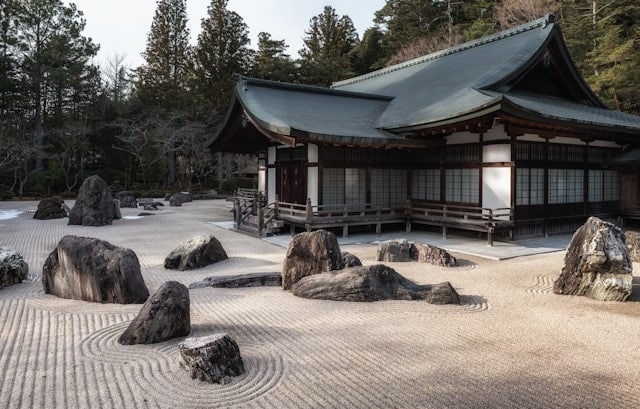
枯山水 (Karesansui): Dry-Landscape Garden
Karesansui is a garden style using elements such as rocks, gravel, sand, moss, and carefully arranged space. Water may be represented without actual ponds or streams.
露地 (Roji): Tea Garden
Roji is the garden approach to a tea room. It is part of the guest’s movement from the outside world toward the tea gathering.
庭木 (Niwaki): Garden Trees
Niwaki literally means garden trees. The word can also be used in English-language gardening contexts for Japanese approaches to shaping trees within a landscape.
Paper and Visual Arts
折り紙 (Origami): Paper Folding
紙 (kami → gami) — paper
折り紙 (origami) — the art or activity of paper folding
Origami may refer to the activity, a finished folded model, or the square paper sold for folding.
ori + kami → origami
Read the complete guide: What Does Origami Mean?
切り紙 (Kirigami): Paper Cutting
紙 (kami → gami) — paper
切り紙 (kirigami) — paper cutting
Origami emphasizes folding, while kirigami deliberately uses cutting as a central technique. Some works combine both.
浮世絵 (Ukiyo-e): Pictures of the Floating World
Ukiyo-e refers to a major visual-art tradition of the Edo period, especially woodblock prints and paintings depicting actors, courtesans, landscapes, famous places, literature, daily life, and popular culture.
絵 (e) — picture
浮世絵 (ukiyo-e) — pictures of the floating world
水墨画 (Suibokuga) / 墨絵 (Sumi-e): Ink Painting
Suibokuga and sumi-e refer to ink painting. Artists use the tone, density, moisture, and movement of black ink to create form and atmosphere.
大和絵 (Yamato-e): Japanese-Style Painting
Yamato-e developed as a Japanese painting tradition associated with Japanese subjects, stories, seasons, landscapes, and court culture.
日本画 (Nihonga): Modern Japanese-Style Painting
Nihonga is a modern category of Japanese-style painting using particular materials and techniques and developed in relation to the modern distinction between Japanese and Western painting.
絵手紙 (Etegami): Picture Letters
Etegami combines a hand-painted image and a short handwritten message, often sent as a personal postcard.
Terms such as sumi-e, suibokuga, and ink painting overlap, but their preferred use can depend on the work, period, and context.
Traditional Japanese Performing Arts
能 (Nō) and 能楽 (Nōgaku)
Nō is a highly stylized form of musical dance-drama using chant, instruments, masks, costumes, and restrained movement.
Nōgaku is the collective term for nō and kyōgen performed within the same theatrical tradition.
狂言 (kyōgen) — spoken comic theater
能楽 (nōgaku) — the combined theatrical tradition of nō and kyōgen
歌舞伎 (Kabuki)
Kabuki is a theatrical tradition known for stylized acting, dramatic stories, music, dance, costumes, stage effects, and distinctive makeup in many roles.
歌 — song
舞 — dance
伎 — skill or performance
However, the historical name is also connected with the verb kabuku, meaning to behave or dress unusually.
文楽 (Bunraku)
Bunraku is a major Japanese puppet-theater tradition combining large puppets, narrative chanting, and shamisen music.
雅楽 (Gagaku)
Gagaku is the court music tradition of Japan. It includes instrumental music, song, and dance traditions transmitted through the imperial court.
舞楽 (Bugaku)
Bugaku is the dance component associated with gagaku, performed in distinctive costumes and masks depending on the piece.
組踊 (Kumiodori)
Kumiodori is a classical musical theater tradition from Okinawa combining speech, song, music, and dance.
日本舞踊 (Nihon Buyō)
Nihon buyō means Japanese dance and commonly refers to classical or traditional stage-dance traditions shaped by kabuki and earlier dance forms.
落語 (Rakugo)
Rakugo is comic storytelling performed by one seated storyteller who uses voice, expression, and small props to portray multiple characters.
講談 (Kōdan)
Kōdan is oral storytelling known especially for historical, military, heroic, and dramatic narratives delivered rhythmically by a performer.
A small number of visible objects does not mean a simple art.
Traditional Music and Instrument Vocabulary
三味線 (shamisen) — three-stringed plucked instrument
尺八 (shakuhachi) — end-blown bamboo flute
琵琶 (biwa) — short-necked lute
和太鼓 (wadaiko) — Japanese drums or Japanese-style drumming
民謡 (min’yō) — folk song
囃子 (hayashi) — musical accompaniment or ensemble in theater and festivals
箏 (Koto)
The koto is a plucked zither used in solo, ensemble, and vocal music. Movable bridges determine the tuning of its strings.
三味線 (Shamisen)
The shamisen is used in many genres, including kabuki, bunraku, folk music, and regional traditions. Its sound and playing style vary by genre.
尺八 (Shakuhachi)
The shakuhachi is a bamboo flute capable of subtle changes in pitch, breath, tone, and texture.
和太鼓 (Wadaiko)
Taiko means drum, while wadaiko specifically means Japanese drums. The term may refer to instruments or to ensemble performance.
Japanese Traditional Crafts Vocabulary
工芸 (Kōgei): Traditional Arts and Crafts
Kōgei is the broad umbrella term. Japanese traditional-craft classifications include ceramics, textiles, lacquerware, metalwork, wood and bamboo work, paper, dolls, brushes, stonework, and other fields.
陶芸 (Tōgei) and 焼き物 (Yakimono): Ceramics and Pottery
焼き物 (yakimono) — fired ware; pottery or ceramics
陶器 (tōki) — pottery or earthenware
磁器 (jiki) — porcelain
Japanese ceramic traditions include regional wares such as Raku, Shino, Oribe, Bizen, Shigaraki, Kutani, Arita, and many others.
漆 (Urushi) and 漆器 (Shikki): Lacquer and Lacquerware
Urushi is natural lacquer and the craft tradition built around it. Shikki means lacquerware.
蒔絵 (Maki-e): Sprinkled-Picture Lacquer
In maki-e, artists create designs with lacquer and sprinkle metallic powder—often gold or silver—onto the surface.
金継ぎ (Kintsugi): Repair with Gold
Kintsugi is a method of repairing ceramics using lacquer, with the repaired lines often finished with metallic powder.
Traditional lacquer-based repair involves different materials, skills, curing conditions, and safety considerations.
和紙 (Washi): Japanese Paper
Washi is Japanese paper traditionally made from plant fibers such as kōzo, mitsumata, and gampi. It supports calligraphy, printmaking, screens, lamps, books, crafts, and conservation.
絞り (Shibori): Resist Dyeing
Shibori is a group of resist-dyeing techniques using methods such as binding, stitching, folding, compressing, or clamping cloth before dyeing.
友禅 (Yūzen): Resist-Dyed Textile Decoration
Yūzen is a textile-dyeing tradition known for detailed pictorial designs, especially on kimono fabric.
組子 (Kumiko): Fine Wooden Latticework
Kumiko joins small pieces of wood into geometric lattice patterns, traditionally without nails.
寄木細工 (Yosegi-Zaiku): Marquetry
Yosegi-zaiku combines woods of different natural colors to create geometric patterns, especially in Hakone craft traditions.
切子 (Kiriko): Cut Glass
Kiriko is cut-glass decoration. Well-known regional traditions include Edo kiriko and Satsuma kiriko.
根付 (Netsuke)
Netsuke are small carved toggles historically used to secure hanging containers or cases to the sash of clothing without pockets.
人形 (Ningyō): Dolls and Figures
Ningyō is the general Japanese word for dolls or human-shaped figures. Traditional forms include hina dolls, kokeshi, Hakata dolls, and festival dolls.
A bowl, textile, box, screen, or tool can combine practical use with material knowledge, regional identity, design, and artistic expression.
Important Pairs Learners Often Confuse
Ikebana vs Kadō
The activity, art, or completed flower arrangement.
Kadō
“The Way of Flowers,” emphasizing the field as a disciplined art.
Chanoyu vs Sadō / Chadō
The cultural practice and gathering around preparing matcha.
Sadō / chadō
“The Way of Tea,” emphasizing long-term study and cultivation.
Shodō vs Shūji
Calligraphy as art and expression.
Shūji
Practice in writing characters correctly and beautifully.
Origami vs Kirigami
Emphasizes folding paper.
Kirigami
Emphasizes cutting paper, often after folding.
Nō vs Nōgaku
The serious poetic dance-drama form.
Nōgaku
The combined theatrical tradition of nō and kyōgen.
Kōgei vs Geijutsu
Craft and applied-art traditions centered on materials and skilled making.
Geijutsu
Art as a broad concept, including fields beyond craft.
For example, someone may study kadō, create ikebana, and display one ikebana arrangement.
How Traditional Arts Connect with One Another
Japanese traditional arts are often studied separately, but they frequently meet in the same cultural setting.
Chanoyu / sadō organizes the gathering
Shodō appears in the hanging scroll
Chabana / ikebana appears in the flowers
Tōgei appears in the tea bowl
Urushi appears in lacquer utensils
Washi appears in paper, screens, or calligraphy
Kōgei appears throughout the handmade objects
Roji and chashitsu connect garden and architecture
The host selects and uses objects in relation to the guests, season, occasion, space, and sequence of the gathering.
Natural Example Sentences
日本の伝統芸術に興味があります。
Nihon no dentō geijutsu ni kyōmi ga arimasu.
I am interested in traditional Japanese arts.
書道と茶道を習っています。
Shodō to sadō o naratte imasu.
I am studying calligraphy and the Way of Tea.
華道は「花の道」という意味です。
Kadō wa “hana no michi” to iu imi desu.
Kadō means “the Way of Flowers.”
歌舞伎は日本を代表する伝統芸能の一つです。
Kabuki wa Nihon o daihyō suru dentō geinō no hitotsu desu.
Kabuki is one of Japan’s representative traditional performing arts.
この美術館では浮世絵を見ることができます。
Kono bijutsukan de wa ukiyo-e o miru koto ga dekimasu.
You can see ukiyo-e at this art museum.
祖父は盆栽を五十年以上育てています。
Sofu wa bonsai o gojūnen ijō sodatete imasu.
My grandfather has cultivated bonsai for over fifty years.
折り紙で鶴を折りました。
Origami de tsuru o orimashita.
I folded a crane from origami paper.
工芸品には地域ごとの材料と技術が生かされています。
Kōgeihin ni wa chiiki goto no zairyō to gijutsu ga ikasarete imasu.
Traditional craft objects make use of materials and techniques from each region.
能と狂言を合わせて能楽といいます。
Nō to kyōgen o awasete nōgaku to iimasu.
Nō and kyōgen together are called nōgaku.
「道」が付く言葉でも、意味は文脈によって異なります。
“Dō” ga tsuku kotoba demo, imi wa bunmyaku ni yotte kotonarimasu.
Even among words containing dō, the meaning differs according to context.
茶室には書と花と陶器が調和していました。
Chashitsu ni wa sho to hana to tōki ga chōwa shite imashita.
The calligraphy, flowers, and ceramics were in harmony in the tea room.
伝統は昔の形を守るだけでなく、新しい表現にもつながります。
Dentō wa mukashi no katachi o mamoru dake de naku, atarashii hyōgen ni mo tsunagarimasu.
Tradition involves not only preserving old forms but also connecting them with new expression.
Common Beginner Misunderstandings
Misunderstanding 1: There Is One Official Japanese Art Forms List
Different institutions classify performing arts, crafts, fine arts, folk culture, and cultural practices for different purposes. Lists naturally vary.
Misunderstanding 2: Every Traditional Art Ends in Dō
Kabuki, nō, origami, ukiyo-e, bonsai, and bunraku are traditional arts, but their names do not end in dō.
Misunderstanding 3: Every Word Ending in “Do” Means “The Way of…”
Romanized words may end in do or dō for many reasons. Check the kanji rather than guessing from spelling alone.
Misunderstanding 4: Dō Automatically Means Religion or Zen
Many practices have philosophical, religious, ethical, or educational influences, but the kanji alone does not make every lesson a spiritual ceremony.
Misunderstanding 5: Craft Is Less Important Than Fine Art
Japanese craft traditions can combine function, material research, regional knowledge, design, artistic expression, and generations of specialized skill.
Misunderstanding 6: Traditional Means Unchanged
Traditions are transmitted through time, but practitioners also respond to new materials, audiences, architecture, technology, and artistic ideas.
Misunderstanding 7: Every School Uses the Same Rules
Tea, flower arrangement, calligraphy, performance, and craft traditions contain schools, regional lineages, and different methods.
Misunderstanding 8: A Japanese Name Makes Any Modern Activity Traditional
A Japanese creative practice may be culturally important without being old or classified as a traditional art. “Japanese art” and “traditional Japanese art” are not identical categories.
FAQ About Japanese Traditional Arts Vocabulary
What are the most famous traditional Japanese arts?
Widely known examples include shodō, sadō or chadō, ikebana or kadō, kōdō, origami, bonsai, nō, kyōgen, kabuki, bunraku, gagaku, ukiyo-e, ceramics, lacquerware, textiles, and washi.
What is the Japanese word for art?
Geijutsu (芸術) is the broad modern word for art. Bijutsu usually means visual or fine art, geinō means performing arts or entertainment, and kōgei means arts and crafts.
What does geido mean?
Geidō (芸道) means the way or disciplined cultivation of an art. It emphasizes practice and development over time.
What does dō mean in Japanese art words?
Dō (道) means way, road, or path. In words such as shodō and kadō, it presents the field as a sustained path of practice.
Is -dō a Japanese suffix?
Calling it a suffix is convenient for learners because it appears at the end of many compounds. More precisely, it is the reading of the kanji 道 used as the second element of a compound noun.
How do you pronounce dō?
The macron marks a long vowel. It is pronounced approximately as two Japanese beats, do-o. Spellings such as dō, dou, and do may represent the same word.
What is the difference between dō and jutsu?
A useful tendency is that dō emphasizes a way or disciplined path, while jutsu emphasizes technique or method. The historical use of individual words is more complex, so this is not an absolute rule.
What are Japan’s traditional “Ways”?
Common examples include shodō, the Way of Writing; sadō or chadō, the Way of Tea; kadō, the Way of Flowers; and kōdō, the Way of Incense. Martial disciplines such as kendō, jūdō, and kyūdō also use 道.
What is the difference between geijutsu and geino?
Geijutsu is art in a broad sense. Geinō focuses on performance and entertainment, especially activities presented before an audience.
What is the difference between bijutsu and kogei?
Bijutsu generally means visual or fine art. Kōgei refers to arts and crafts involving skilled work with materials, often combining function and beauty.
Are manga and anime traditional Japanese arts?
Manga and anime are major Japanese creative and media arts, but they are not usually placed in the same historical category as traditional arts such as nō, kabuki, shodō, or lacquerware.
Is origami a traditional Japanese art?
Origami is widely discussed as a Japanese paper art and cultural practice. Its history includes ceremonial paper folding, recreational models, modern education, and contemporary international design.
Is bonsai a Japanese art form?
Yes. Bonsai is widely treated as a traditional Japanese art and practice of cultivating and shaping woody plants in containers.
What is the difference between ikebana and kado?
The terms overlap. Ikebana can refer to the activity, art, or completed arrangement. Kadō means the Way of Flowers and emphasizes the practice as a disciplined art.
Where should a beginner start?
Start with one art that genuinely interests you, learn its basic vocabulary and context, and then try an exhibition, performance, museum, workshop, or beginner lesson led by a reliable practitioner.
Recommended Learning Path
Geijutsu, bijutsu, geinō, geidō, and kōgei.
Step 2: Learn four major dō arts
Shodō, sadō/chadō, kadō, and kōdō.
Step 3: Add one visual and one performing art
For example, ukiyo-e and kabuki.
Step 4: Add one material tradition
For example, ceramics, lacquerware, textiles, or washi.
Step 5: Experience the art in context
Read the words, see the objects, hear the music, watch the movements, or join a beginner workshop.
Ikebana Meaning
Origami Meaning
Shodō Meaning
Chanoyu Meaning
Which Art Word, and Is It Really 道? A 2-Question Check
Five Japanese words all get translated as “art,” and not every word ending in “do” contains the kanji for “way.” Answer two questions.
The safest broad word for “art” as a concept.
Painting, sculpture, design, art museums.
Performing arts or entertainment, e.g. 伝統芸能 for kabuki.
Practice and transmission, not always performed for an audience.
Ceramics, lacquerware, textiles, metalwork, and similar fields.
As in 書道 shodō, 茶道 sadō, 華道 kadō, 香道 kōdō.
食堂 shokudō (dining hall, 堂) and 今度 kondo (this time, 度) are common false alarms.
※ Many important traditional arts, including kabuki, nō, origami, ukiyo-e, and bonsai, do not end in -dō at all. Do not assume every traditional art is a “Way.”
Summary: Japanese Traditional Arts and the Meaning of Dō
The category includes disciplined arts, performing arts, visual arts, crafts, music, gardens, and living cultural practices.
● There is no single exhaustive list
Different institutions classify culture according to different purposes.
● Important category words
Geijutsu = art broadly
Bijutsu = visual or fine art
Geinō = performing arts or entertainment
Geidō = disciplined cultivation of an art
Kōgei = arts and crafts
● Meaning of dō
Dō is the reading of 道, meaning way or path. In art words, it often presents the activity as a sustained field of practice.
● “Suffix” is convenient but approximate
Dō is more precisely the second kanji element in a compound noun.
● Major dō arts
Shodō = the Way of Writing
Sadō/chadō = the Way of Tea
Kadō = the Way of Flowers
Kōdō = the Way of Incense
● Not every traditional art ends in dō
Origami, kabuki, nō, ukiyo-e, bonsai, and kōgei traditions are also important Japanese arts.
● Traditional arts connect
A tea gathering may bring together calligraphy, flowers, ceramics, lacquerware, paper, gardens, architecture, sweets, and hospitality.
道 = a road or path → in an art, a path of learning and practice.
But remember: Japanese traditional art is much larger than the group of words ending in -dō.
References
- Agency for Cultural Affairs: Arts and Culture — the broad scope of arts and culture in Japan.
- Agency for Cultural Affairs: International Dissemination of Japanese Culture — traditional performing arts, popular entertainment, culture of everyday life, music, and crafts.
- Japan Cultural Expo: Traditional Performing Arts of Japan — kabuki, nō, kyōgen, bunraku, dance, yose arts, and gagaku.
- Japan Cultural Expo: Five Traditional Performing Arts — nōgaku, bunraku, kumiodori, kabuki, and gagaku.
- Japan National Tourism Organization: Guide to Japan’s Cultural Heritage — geidō, sadō, kadō, shodō, bonsai, and cultural experiences.
- Kotobank: 芸道 — meanings of geidō and the emphasis on cultivation of an art.
- Kotobank: 道 — meanings of 道, including a specialized art or discipline.
- Kogei Japan: About Traditional Japanese Crafts — craft categories including ceramics, textiles, lacquerware, metalwork, wood and bamboo, washi, and other crafts.
- Agency for Cultural Affairs: Tangible Cultural Properties — paintings, crafts, sculptures, calligraphy, books, and other fine arts and crafts.
- Japan National Tourism Organization: Kōdō and Washi Experiences — the Way of Incense and traditional paper culture.
- Highlighting Japan: Washi—Tradition and New Possibilities — materials, history, properties, and artistic uses of washi.
- Highlighting Japan: Expressions with Lacquer — urushi, Wajima lacquerware, and maki-e technique.