- 1 Japanese Aesthetics: 12 Concepts That Explain Wabi-Sabi, Yūgen, Kintsugi, and More
- 1.1 Quick answer: what are the main Japanese aesthetic concepts?
- 1.2 The deepest common thread: beauty in a world that changes
- 1.3 1. Wabi (侘び): beauty without display
- 1.4 2. Sabi (寂び): the depth that appears with age
- 1.5 3. Wabi-sabi (侘び寂び): why the combined phrase is bigger than “perfectly imperfect”
- 1.6 4. Yūgen (幽玄): beauty that becomes deeper because it is not fully shown
- 1.7 5. Mono no aware (物の哀れ): the ache of knowing a moment will pass
- 1.8 6. Ma (間): the space that is not empty
- 1.9 7. Shibui (渋い) and shibumi (渋み): understated sophistication
- 1.10 8. Iki (粋): chic without strain
- 1.11 9. Miyabi (雅): the polished elegance of the court
- 1.12 10. Kire (切れ): the power of the cut
- 1.13 11. Jo-ha-kyū (序破急): rhythm as acceleration
- 1.14 12. Kintsugi (金継ぎ): a craft of visible repair
- 1.15 Wabi-sabi vs. yūgen vs. mono no aware vs. ma: the easiest way to tell them apart
- 1.16 Are wabi-sabi and kintsugi the same thing?
- 1.17 Is “imperfection” really the core of Japanese aesthetics?
- 1.18 Why Japanese aesthetic words often resist one-word translation
- 1.19 Japanese aesthetics in tea: where many ideas meet
- 1.20 Japanese aesthetics in Noh: why less can communicate more
- 1.21 Japanese aesthetics in gardens and architecture
- 1.22 Japanese aesthetics in contemporary design: use the ideas, not the stereotype
- 1.23 Common myths about Japanese aesthetic principles
- 1.23.1 Myth 1: There are exactly seven principles of Japanese aesthetics
- 1.23.2 Myth 2: Wabi-sabi means “flaws are beautiful”
- 1.23.3 Myth 3: Kintsugi was invented to teach people about emotional trauma
- 1.23.4 Myth 4: Yūgen means “a feeling too deep for words”
- 1.23.5 Myth 5: Japanese aesthetics is minimalist
- 1.24 How to remember the concepts: one scene, twelve questions
- 1.25 Japanese aesthetics through time: a short map of where the concepts come from
- 1.26 Aesthetic, philosophy, technique, or ordinary adjective? Do not put every Japanese word in the same box
- 1.27 One object, six Japanese aesthetic lenses: how the concepts overlap without becoming synonyms
- 1.28 How to use Japanese aesthetic concepts without turning Japan into a mood board
- 1.29 A quick chooser: which Japanese aesthetic word fits the feeling you mean?
- 1.30 FAQ: Japanese aesthetic concepts
- 1.30.1 What is the most famous Japanese aesthetic concept?
- 1.30.2 What is the Japanese aesthetic of imperfection?
- 1.30.3 What is the Japanese aesthetic of mystery?
- 1.30.4 What is the Japanese concept of fleeting beauty?
- 1.30.5 What is the Japanese art of fixing broken pottery with gold?
- 1.30.6 Is kintsugi part of wabi-sabi?
- 1.30.7 What is the difference between wabi-sabi and yūgen?
- 1.30.8 What does ma mean in Japanese aesthetics?
- 1.31 Final takeaway: Japanese aesthetics is a vocabulary of attention
- 1.32 Related guides
- 1.33 Sources and further reading
Japanese Aesthetics: 12 Concepts That Explain Wabi-Sabi, Yūgen, Kintsugi, and More
If you search for Japanese aesthetics, you will quickly meet a small constellation of words: wabi-sabi, yūgen, mono no aware, ma, shibui, iki, and often kintsugi. They are frequently presented online as if Japan had one official list of “seven aesthetic principles.” It does not. Japanese aesthetic thought developed over many centuries in poetry, religion, tea, theater, painting, architecture, gardens, crafts, and everyday taste. Different writers emphasize different ideas.
That is actually good news for a learner. Instead of memorizing a rigid checklist, you can learn a set of lenses. One lens notices impermanence. Another notices restraint. Another notices the depth created by what is hidden. Another notices the eloquence of empty space. Once you know which lens you are using, Japanese art and language become much easier to read.
Quick answer: what are the main Japanese aesthetic concepts?
There is no single canonical list, but the following concepts are among the most useful for understanding traditional and modern Japanese aesthetics. The Stanford Encyclopedia of Philosophy, for example, surveys mono no aware, wabi, sabi, yūgen, iki, and kire as major historical ideas. Other concepts such as ma, shibui, and miyabi are also indispensable in particular artistic or cultural contexts. Kintsugi is better understood as a repair practice with aesthetic implications than as an abstract principle on the same historical footing.
| Concept | Japanese | Simple English gloss | What to notice |
|---|---|---|---|
| Wabi | 侘び | austere, unpretentious beauty | simplicity, modest means, lack of display |
| Sabi | 寂び | beauty deepened by age | patina, weathering, quiet maturity |
| Wabi-sabi | 侘び寂び | beauty of the imperfect and time-worn | imperfection, impermanence, restraint |
| Yūgen | 幽玄 | mysterious depth | what is suggested but not fully shown |
| Mono no aware | 物の哀れ | the pathos of things | the emotion of knowing things pass |
| Ma | 間 | meaningful interval or space | the pause, gap, or relation between things |
| Shibui / shibumi | 渋い / 渋み | subtle, restrained sophistication | quiet quality that rewards attention |
| Iki | 粋 | urbane chic | stylishness without trying too hard |
| Miyabi | 雅 | courtly elegance | refinement, polish, cultivated grace |
| Kire | 切れ | cutting / discontinuity | a break that gives form and intensity |
| Jo-ha-kyū | 序破急 | beginning, break, rapid | rhythm that accelerates through a form |
| Kintsugi | 金継ぎ | golden joinery | repair made visible rather than erased |
The deepest common thread: beauty in a world that changes
A powerful starting point is impermanence. Classical Japanese thought was deeply shaped by Buddhist ideas of change, but you do not need to reduce every Japanese artwork to Buddhism to see the pattern. Seasons turn. Flowers fall. Buildings weather. Human relationships begin and end. A tea gathering happens once and cannot be repeated in exactly the same way.
Many Japanese aesthetic concepts are ways of responding to that unstable world without demanding that it stop changing. Mono no aware feels the poignancy of change. Sabi can appreciate the surface created by years of change. Wabi may find sufficiency in what is modest rather than complete or luxurious. Yūgen lets obscurity and distance enlarge the imagination. Kintsugi can preserve a vessel after rupture without pretending that rupture never happened.
This does not mean “Japanese people think broken things are always more beautiful” or “Japan dislikes perfection.” Japanese art also contains dazzling symmetry, brilliant gold, meticulous polish, exuberant decoration, and technical virtuosity. Aesthetic traditions are plural. The point is that Japanese culture developed unusually articulate vocabularies for forms of beauty that modern English-language design discourse often treats as defects: age, asymmetry, incompleteness, dimness, silence, and transience.
Impermanence is the condition. Mono no aware is one emotional response to it. Wabi-sabi is one aesthetic response to simplicity, incompleteness, and age. Yūgen is depth created through suggestion. Ma is the interval that lets things breathe and relate. Kintsugi is a material practice that can make rupture visible.
1. Wabi (侘び): beauty without display
Wabi did not begin as a cheerful lifestyle word. The noun derives from wabiru / wabu, a verb historically associated with discouragement, loneliness, hardship, or reduced circumstances. Over time—especially in medieval literary culture and the development of tea—this negative condition could be revalued. A sparse life outside ordinary status competition could become a place of clarity rather than deprivation.
In tea culture, wabi came to value settings and objects that rejected ostentatious luxury. A rough local ceramic, a bamboo scoop, a small hut-like tea room, or an arrangement that felt unforced could carry more weight than an expensive object displayed simply because it was expensive. The important point is not “cheap is beautiful.” Wabi is closer to freedom from the need to prove value through abundance.
This is why translating wabi as “rustic” is sometimes useful but incomplete. Rustic is a visual style. Wabi can also describe a stance: finding enough in less, and allowing understatement to create concentration.
What does wabi look like?
- A tea room that is intentionally small rather than grand.
- A handmade vessel whose irregularity preserves the touch of the maker.
- A flower arrangement with one seasonal branch instead of a huge bouquet.
- A room where natural materials and subdued surfaces take precedence over display.
But a brand-new beige room full of expensive “minimalist” products is not automatically wabi. The historical idea is not a color palette.
2. Sabi (寂び): the depth that appears with age
Sabi is often translated as “patina,” and that gets us closer. Historically the word is connected with senses of loneliness, desolation, quiet, and aging. In aesthetic use it came to describe a subdued quality that emerges as something matures, weathers, or becomes old.
Imagine unfinished wood darkened by years of hands, a metal surface that has mellowed, a ceramic glaze that no longer looks factory-new, or an old garden stone softened by moss. Sabi asks you to notice that time does not merely damage a thing; time can write on it.
That does not mean every stain is beautiful or that neglect is automatically aesthetic. The distinction is important. Sabi is not a license for dirt. It is an appreciation of age when age has produced expressive depth.
3. Wabi-sabi (侘び寂び): why the combined phrase is bigger than “perfectly imperfect”
In modern English, wabi-sabi is the best-known umbrella term. It is commonly described as “the beauty of imperfection, impermanence, and incompleteness.” That summary is useful if you treat it as a doorway rather than the whole house.
Wabi-sabi is not the celebration of random flaws for their own sake. A badly made chair that collapses is not profound because it is imperfect. A cracked pipe is still a problem. The aesthetic becomes meaningful when restraint, material honesty, age, use, and transience make an object or experience more particular rather than merely defective.
A handmade tea bowl is a classic example because it gathers several qualities at once. Its shape may be slightly asymmetrical; the glaze may record unpredictable effects of the kiln; the clay may feel rough; years of handling may soften its surface; and the bowl exists not as a sculpture sealed away from life but as something held, turned, washed, and used.
For a deeper guide to the term, including its history, philosophy, and everyday examples, see the dedicated article: Wabi-Sabi Meaning: The Japanese Philosophy of Imperfect, Impermanent Beauty.
4. Yūgen (幽玄): beauty that becomes deeper because it is not fully shown
Yūgen is one of the hardest Japanese aesthetic terms to translate. “Mysterious profundity,” “mysterious grace,” “subtle depth,” and “elusive beauty” all capture part of it. The two kanji help: 幽 suggests what is dim, secluded, hidden, or faint; 玄 suggests depth, darkness, mystery, or profundity.
The easiest way to feel yūgen is through an image: mountains partly hidden by autumn mist. A completely clear photograph gives you more information. The misty view may give you more depth, because your imagination continues where vision stops. The unseen part of the mountain becomes active in your mind.
Yūgen became an important idea in medieval poetry and especially in Noh theory. Zeami, one of the foundational figures of Noh, treated yūgen as a high artistic ideal. Noh does not generally explain emotion in the way a modern film close-up might. A mask, a slow turn, a pause, a repeated line, or a sparse stage can imply more than it states.
So yūgen is not simply “mysterious things are beautiful.” It is an aesthetics of suggestion with depth.
Read the full guide here: Yūgen Meaning: The Japanese Aesthetic of Mystery, Depth, and Suggestion.
5. Mono no aware (物の哀れ): the ache of knowing a moment will pass
If yūgen is about what remains beyond the visible, mono no aware is about what happens to the heart when you recognize that things do not last. It is often translated as “the pathos of things,” but “pathos” can sound grander and sadder than the Japanese feeling requires.
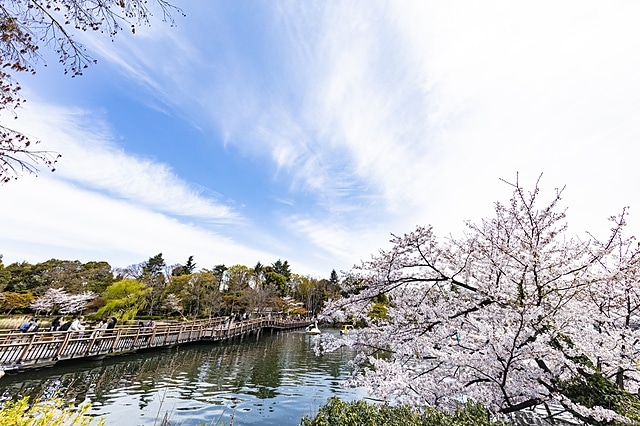
The classic beginner example is cherry blossoms. Why are blossoms so emotionally powerful? Not because pink flowers are uniquely beautiful, but because the flowering is brief. The petals are already on their way to falling. Pleasure and loss occupy the same scene.
That mixture matters. Mono no aware is not simple pessimism. If everything lasted forever, some moments might lose their intensity. A child’s last day of school, a summer evening, a farewell at a train station, or a final meal before moving away can feel precious precisely because time has placed an edge around them.
This concept is central to classical Japanese literature, particularly discussions of The Tale of Genji, and it remains an enormously useful lens for modern stories about memory, youth, seasons, and parting.
6. Ma (間): the space that is not empty
Ma is usually translated as “space,” “gap,” “interval,” or “pause,” but none of those words alone captures its relational quality. Ma is not a blank that needs filling. It is the interval that allows two things to have a meaningful relationship.
In music, ma can be the pause that gives a phrase tension. In architecture, it can be the transitional space between inside and outside. In conversation, a silence can give weight to what was just said. In calligraphy, unmarked paper shapes the force of the brushstroke. In a garden, open gravel or a stretch of moss can make one stone more present.
For English speakers raised on phrases like “dead air” and “empty space,” ma can be a useful reversal. The gap is not the absence of content. Sometimes the gap is part of the content.
7. Shibui (渋い) and shibumi (渋み): understated sophistication
Shibui is an ordinary Japanese adjective with a fascinating semantic range. Its older, literal sense includes an astringent taste—the mouth-drying quality of an unripe persimmon, for example. From that sensation developed aesthetic and social senses such as sober, tasteful, understated, seasoned, or quietly cool.
A shibui object rarely shouts for attention. Its quality may become clearer with repeated viewing. A dark textile with superb weaving, a restrained ceramic form, a mature actor’s unflashy performance, or even a person with understated style can be called shibui.
That makes shibui different from wabi-sabi. Something does not have to be old, cracked, rustic, or asymmetrical to be shibui. A perfectly finished modern object can be shibui if its sophistication is controlled rather than flashy.
8. Iki (粋): chic without strain
Iki belongs to a different social and historical world from wabi. It is associated especially with the urban culture of Edo and has connotations of chic, stylishness, sensuality, independence, and knowing restraint. The philosopher Kuki Shūzō famously analyzed the structure of iki in the twentieth century, but the taste itself emerged from earlier urban culture.
Think of someone who is impeccably dressed but avoids looking overdecorated; flirtatious without being desperate; fashionable without appearing to have spent all day trying. The English word chic is often the quickest bridge.
This is a useful correction to stereotypes. Japanese aesthetics is not one long beige hallway of rustic minimalism. Edo cities produced style, wit, glamour, fashion, nightlife, and playful sophistication too.
9. Miyabi (雅): the polished elegance of the court
Miyabi points toward refinement, grace, and cultivated elegance, especially the aristocratic culture of the Heian court. Where wabi may dignify what is rough or modest, miyabi is sensitive to polish, manners, poetic allusion, beautiful dress, calligraphy, fragrance, seasonal appropriateness, and cultivated taste.
It is helpful to put miyabi and wabi next to each other because they reveal how historically diverse Japanese taste can be. A sumptuous layered court robe and a rough Raku tea bowl can both belong to “Japanese aesthetics,” but they ask for different vocabularies.
10. Kire (切れ): the power of the cut
Kire literally means a cut, break, or severing, and it became important in several artistic forms. In haiku, a kireji or “cutting word” can create a structural and emotional break between images. In flower arrangement, cutting a plant removes it from ordinary growth, but the cut also allows it to be composed anew. In performance and visual composition, discontinuity can intensify attention.
The key paradox is that separation can create relation. A cut does not simply destroy continuity; it can make the two sides of a composition newly visible to each other.
11. Jo-ha-kyū (序破急): rhythm as acceleration
Jo-ha-kyū is a principle of temporal organization often associated with traditional performing arts. The three parts can be glossed as introduction, breaking/development, and rapid conclusion. Rather than moving at a uniform pace, a form begins deliberately, develops and loosens, then accelerates toward an ending.
You can encounter the idea in discussions of Noh, gagaku, tea procedure, martial forms, and other arts. It is less a “look” than a way time is shaped. This matters because aesthetics is not only about objects. Japanese aesthetic thought also attends to how an experience unfolds.
12. Kintsugi (金継ぎ): a craft of visible repair
Kintsugi literally means “gold joinery” or “golden joining.” In traditional practice, broken ceramics are repaired with urushi lacquer; after the repair is built up, stabilized, and finished, gold powder may be applied to the surface. The gold line does not make the crack disappear. It gives the break a new visual role.
Gold-decorated lacquer repair became closely associated with tea ceramics in early modern Japan. Museums such as the Smithsonian’s National Museum of Asian Art emphasize that lacquer—not gold alone—is the structural heart of the traditional process. This distinction is useful because many modern “kintsugi kits” use epoxy and metallic pigment. Those can be creative repair methods, but they are materially different from traditional urushi work.
Kintsugi is often explained today as a philosophy of psychological healing: “your scars make you more beautiful.” That metaphor can be meaningful, but historically kintsugi is first a craft practice. Its modern therapeutic symbolism is an interpretation layered onto the material tradition, not a single ancient proverb every Japanese person was taught.
For the full history, process, philosophy, and tattoo symbolism, see Kintsugi Meaning: Gold Repair, Pottery, Philosophy, and Tattoo Symbolism.
Wabi-sabi vs. yūgen vs. mono no aware vs. ma: the easiest way to tell them apart
These four are often mixed together because the same scene can activate all of them. Imagine an old temple garden at dusk.
- The worn stone basin and weathered wood may suggest sabi.
- The modest, unshowy arrangement may suggest wabi.
- The awareness that the light and season are passing may evoke mono no aware.
- The dark trees partly hiding the mountain may create yūgen.
- The unfilled distance between stones may work as ma.
Nothing requires you to pick only one. Aesthetic concepts are not labels pasted onto objects; they are ways of attending.
| If your attention is on… | The closest concept is… |
|---|---|
| simplicity and freedom from display | wabi |
| age, patina, quiet maturity | sabi |
| the sadness/beauty of passing time | mono no aware |
| depth created by partial concealment | yūgen |
| the expressive pause or interval | ma |
| understated mature taste | shibui |
| urban stylishness | iki |
| visible repair of broken ceramics | kintsugi |
Are wabi-sabi and kintsugi the same thing?
No. They overlap, but they are not synonyms.
Wabi-sabi is an aesthetic sensibility associated with simplicity, incompleteness, weathering, and impermanence. Kintsugi is a specific method of repairing ceramics with lacquer and a decorative metal finish, often gold. A kintsugi-repaired bowl may be appreciated through a wabi-sabi lens because the repair accepts the object’s changed history instead of restoring an illusion of untouched newness.
But kintsugi can also be visually brilliant. A bright gold seam can be luxurious and attention-grabbing—qualities that are not automatically “wabi.” Conversely, countless wabi-sabi objects have never been broken or repaired.
Is “imperfection” really the core of Japanese aesthetics?
Imperfection is one important theme, but making it the master key creates a distorted picture. Japanese visual culture also values precision and finish. Consider the immaculate geometry of some Buddhist architecture, the polished lacquer and gold of maki-e, the extraordinary regularity of fine textiles, the technical perfection of swords, the controlled symmetry of certain gardens, or the refinement of courtly arts.
What is distinctive is not a national dislike of perfection. It is the coexistence of multiple standards of beauty, including highly developed traditions that make room for what many modern industrial cultures try to erase: traces of process, evidence of touch, weathering, asymmetry, seasonal change, and silence.
When an English-language article says “the Japanese believe imperfection is beauty,” mentally add two words: “sometimes, deliberately.”
Why Japanese aesthetic words often resist one-word translation
Many of these terms are difficult because they are not just labels for visual properties. They carry histories of use across genres.
Yūgen has traveled through Chinese intellectual vocabulary, Japanese poetry, and Noh theory. Wabi changed from a word connected with distress and loneliness into a positive aesthetic and ethical ideal in certain medieval and tea contexts. Sabi draws force from associations with solitude, aging, and a quiet tone that can belong to poetry as much as pottery. Iki belongs to social style as much as to visual design.
That is why a one-line “untranslatable Japanese words” graphic is almost always too neat. Translation is possible, but it often takes a phrase, an example, and a little history.
Japanese aesthetics in tea: where many ideas meet
The tea gathering is one of the best places to see aesthetic concepts working together. In the sixteenth century, influential tea practitioners increasingly valued local and Korean ceramics with rough, irregular, or handmade qualities alongside prestigious Chinese objects. Sen no Rikyū became especially associated with austere wabi-cha.
But tea is not simply “minimalism with matcha.” The host composes an event: room, utensils, scroll, flowers, food, season, gestures, timing, and guests. The Metropolitan Museum of Art notes that each gathering is a unique experience and that the host chooses an assemblage appropriate to that occasion. The beauty lies partly in the objects, but also in attention, relation, and irrepeatability.
Here the conceptual network becomes visible:
- Wabi can inform the modest scale and unshowy materials.
- Sabi can appear in an old utensil carrying the traces of age.
- Ma can shape pauses, spatial intervals, and composition.
- Mono no aware can arise from seasonal references and the one-time nature of the meeting.
- Kintsugi may preserve a cherished bowl whose break is now part of its visual biography.
Japanese aesthetics in Noh: why less can communicate more
Noh gives us a different cluster. The stage is spare. Movement is highly disciplined. Masks limit obvious facial expression. Stories often involve memory, ghosts, longing, and identities that reveal themselves gradually. The Japan Arts Council describes Noh as an art in which profound meaning can be embodied in slight movements.
This is fertile ground for yūgen: the audience is not spoon-fed emotion. Gesture, chant, costume, pause, and implication create a field that the imagination completes. Jo-ha-kyū helps us think about the temporal shaping of performance, while ma helps us attend to intervals and silence.
Again, these ideas are not interchangeable. They work at different levels: quality, rhythm, relation, atmosphere.
Japanese aesthetics in gardens and architecture
Gardens make another popular entry point, but it is worth avoiding clichés. Not every Japanese garden is “Zen,” and not every empty area means ma. Still, several recurring strategies are useful to notice: framed views, asymmetrical balance, seasonal change, borrowed scenery, textures that age, controlled concealment, and transitions between inside and outside.
A path that bends so you cannot see the destination at once can encourage a yūgen-like experience of partial revelation. A stretch of unoccupied ground can structure ma. Moss and weathered stone can evoke sabi. A modest material palette can support wabi. Autumn leaves or falling blossoms can sharpen mono no aware.
The point is not to label every square meter. The concepts teach you what questions to ask: What is hidden? What is passing? What has aged? What has been left open? What has been deliberately reduced?
Japanese aesthetics in contemporary design: use the ideas, not the stereotype
Global design has enthusiastically borrowed Japanese aesthetic vocabulary. That can be productive, but it also creates a familiar flattening: beige plaster, raw wood, one handmade vase, and the word “wabi-sabi” in a caption.
If you want to use these concepts thoughtfully in contemporary design, begin with the underlying relationship rather than the surface look.
To apply wabi-sabi
Choose materials that can age well. Repair rather than automatically replace. Allow handmade variation. Resist unnecessary visual noise. But do not intentionally make functional objects worse just to create “imperfection.”
To apply yūgen
Consider partial views, layered light, shadow, screens, thresholds, and elements that reveal themselves gradually. Yūgen is not darkness for darkness’s sake; it is the imaginative depth created by limited disclosure.
To apply ma
Design the relationships between objects. Give focal points enough surrounding space. Let transitions matter. In audio, performance, or interaction design, give pauses the same attention you give events.
To learn from kintsugi
Think about maintenance as part of design. Can an object be repaired? Will the repair look honest or awkward? Could a product become more personal as it is maintained? This is more faithful to the craft than merely printing gold crack graphics on something that was never broken.
Common myths about Japanese aesthetic principles
Myth 1: There are exactly seven principles of Japanese aesthetics
You will find lists of five, seven, nine, or twelve. These are teaching frameworks, not an ancient national constitution of beauty. Treat them as curated maps.
Myth 2: Wabi-sabi means “flaws are beautiful”
That is too broad. Wabi and sabi have distinct histories involving reduced circumstances, simplicity, solitude, age, patina, and quiet depth. Imperfection is part of the story, not the whole story.
Myth 3: Kintsugi was invented to teach people about emotional trauma
The historical evidence points first to ceramic repair, lacquer craft, collecting, and tea culture. The psychological metaphor is modern and can be valuable, but it should be presented as metaphor.
Myth 4: Yūgen means “a feeling too deep for words”
That phrase is not entirely wrong, but it is so vague that it can describe almost anything. Yūgen becomes more useful when you connect it with suggestion, concealment, imaginative depth, poetry, and Noh.
Myth 5: Japanese aesthetics is minimalist
Some traditions value austerity. Others revel in dazzling gold, dense pattern, saturated color, lavish costume, or playful urban fashion. “Japanese = minimalist” is a modern design shortcut, not a historical rule.
How to remember the concepts: one scene, twelve questions
Imagine you enter an old room at twilight. There is a repaired tea bowl on a low table. A flower is beginning to wilt. Outside, a mountain is half hidden by mist. The room is quiet.
- Wabi: Does the modest room feel sufficient without luxury?
- Sabi: Has age given the wood or pottery more character?
- Wabi-sabi: Do simplicity, age, irregularity, and impermanence work together?
- Yūgen: Does the obscured mountain feel deeper because you cannot see it all?
- Mono no aware: Does the fading flower feel moving because it will soon be gone?
- Ma: Does the open space between objects create relation and calm?
- Shibui: Is the quality understated rather than flashy?
- Iki: Is there effortless urban stylishness? Maybe not in this room—that is useful too.
- Miyabi: Is there courtly elegance and polish? Again, perhaps not.
- Kire: Does a break or cut structure the composition?
- Jo-ha-kyū: How does the experience unfold in time?
- Kintsugi: Has repair become part of the bowl’s visible history?
If you can ask the right question, you no longer need a simplistic translation.
Japanese aesthetics through time: a short map of where the concepts come from
One reason these words become confusing online is that they are often placed on a single infographic as though they were invented together. They were not. A very rough historical map makes the differences easier to remember.
Heian court culture (794–1185)
Poetry and aristocratic taste help make ideas such as miyabi—courtly refinement—and sensitivities later associated with mono no aware especially important.
Kamakura to medieval poetic culture (1185–1333 and after)
Yūgen develops as a major critical term in poetry. Its emphasis on hidden depth and suggestion later becomes central to Noh aesthetics.
Muromachi period (1336–1573)
Noh flourishes, with Zeami giving yūgen a crucial place in performance theory. Ink painting, Zen institutions, linked verse, gardens, and tea culture also create fertile ground for ideals of restraint and suggestiveness.
Late medieval to Momoyama tea culture (15th–16th centuries)
The tea world increasingly values humble, rustic, and locally made objects. Wabi becomes an affirmative aesthetic ideal rather than merely a word for deprivation or loneliness.
Early modern culture (17th century onward)
Sabi becomes especially important in haikai and later discussions of Bashō. Urban taste also develops concepts such as iki, which belongs to a very different social and aesthetic world from rustic wabi.
Modern and global usage
Words such as wabi-sabi and kintsugi become internationally recognizable. Their meanings expand as designers, artists, therapists, writers, and brands reuse them—sometimes insightfully, sometimes far beyond their historical contexts.
Aesthetic, philosophy, technique, or ordinary adjective? Do not put every Japanese word in the same box
English-language articles often label every appealing Japanese term a “philosophy.” That creates instant mystique, but it also flattens important distinctions. The following four categories are more useful.
1. Historical aesthetic concepts
Yūgen, wabi, sabi, miyabi, and iki have histories as terms of taste, artistic criticism, or cultural style. Their meanings changed over time, but they can legitimately be discussed as aesthetic concepts.
2. Broader sensitivities or interpretive ideas
Mono no aware names an emotional sensitivity to the pathos of things and their passing. Ma is an ordinary Japanese word for interval, space, or timing that also becomes extremely productive in discussions of design and performance. Context matters: not every use of 間 is a philosophical statement.
3. Artistic and craft practices
Kintsugi is first of all a repair practice. It can embody or invite aesthetic interpretations, but a gold-repaired bowl is not the same category of thing as an abstract concept such as yūgen. The same caution applies to other crafts that become popular online as “Japanese philosophies.”
4. Ordinary words that can describe an aesthetic experience
Words such as 儚い (hakanai, fleeting/ephemeral), 静か (shizuka, quiet), or 懐かしい (natsukashii, nostalgically familiar) can describe powerful aesthetic experiences without being formal aesthetic doctrines. A cherry blossom can be hakanai; that does not mean “hakanai” was historically codified as one of Japan’s official aesthetic principles.
This distinction is useful for language learning too. It stops you from speaking as though every common adjective carries an ancient doctrine each time a Japanese person says it.
One object, six Japanese aesthetic lenses: how the concepts overlap without becoming synonyms
Imagine an old tea bowl. It is slightly asymmetrical, its glaze varies across the surface, the foot is worn, and a hairline crack was repaired years ago. Now look at exactly the same object through six lenses.
Wabi: You notice its modesty. It does not depend on precious materials or ostentatious decoration.
Sabi: You notice the quiet depth produced by age—the softened surface, wear, patina, and sense of time.
Wabi-sabi: You value the bowl as an impermanent, irregular, time-bearing thing rather than judging it against factory-perfect newness.
Ma: You notice the interval around the bowl: the empty space on the tray, the pause before it is lifted, the rhythm between host and guest.
Mono no aware: You feel that the gathering, the season, the people, and even the bowl will not remain exactly as they are.
Kintsugi: You notice a specific human intervention: someone decided the broken object deserved care and made the repair visible.
The bowl does not have to “belong” to only one concept. Aesthetic vocabulary works more like a set of questions than a system of mutually exclusive labels.
How to use Japanese aesthetic concepts without turning Japan into a mood board
If your goal is design, photography, writing, or simply appreciating Japanese art, the safest approach is to move from word → historical context → concrete example → personal application, rather than from word → inspirational slogan.
Ask what medium gave the idea its force
For yūgen, look at poetry and Noh. For wabi, look closely at tea culture. For sabi, consider aged surfaces and poetic traditions. For ma, pay attention to timing as well as empty physical space. For iki, remember the urban Edo context behind its chic restraint.
Separate observation from moral advice
“This repaired bowl makes its history visible” is an observation. “Therefore every emotional wound makes you stronger” is a modern moral interpretation. The second statement may help someone, but it should not be presented as the original dictionary definition of kintsugi.
Prefer specific sensory details to generic “Zen” language
Instead of saying “This room is very Zen and wabi-sabi,” explain what you actually see: unpainted wood, hand-thrown ceramics, uneven glaze, a low level of ornament, seasonal branches, a shadowed recess, or deliberate empty space. Specificity is both more accurate and more useful.
Let concepts disagree
Japanese aesthetics is not one mood. Miyabi can prize exquisite courtly refinement; iki can signal urban chic; wabi can value rustic humility. A glittering, fashion-conscious Edo aesthetic and a restrained tea-room aesthetic can both be Japanese without needing to collapse into the same “minimalist” philosophy.
A quick chooser: which Japanese aesthetic word fits the feeling you mean?
| If your main idea is… | Start with… | Ask yourself… |
|---|---|---|
| Beauty in modest simplicity, irregularity, and lack of display | wabi | Would this still feel valuable without luxury or polish? |
| Beauty deepened by age and weathering | sabi | Has time added character rather than merely caused damage? |
| Beauty inseparable from impermanence and imperfect material life | wabi-sabi | Am I noticing change, incompleteness, restraint, and age together? |
| Depth suggested by what cannot be fully seen or said | yūgen | Does concealment make the experience larger in imagination? |
| The tender ache of a beautiful thing because it will pass | mono no aware | Is transience itself creating the emotion? |
| Meaning created by an interval, pause, or spacing | ma | Would the “empty” part change the rhythm if removed? |
| Understated sophistication | shibui | Is the appeal restrained, mature, and not immediately showy? |
| Stylish urban cool with restraint | iki | Is there a sense of effortless chic rather than rustic humility? |
| A concrete repair that keeps breakage visible | kintsugi | Am I talking about an actual repaired object or only using a metaphor? |
| A thing that feels fleeting, fragile, or short-lived | hakanai | Do I need an adjective rather than a historical aesthetic category? |
That final row is especially important for learners. English searches sometimes turn any evocative Japanese word into a named “aesthetic.” Japanese itself does not require that move. Sometimes the most accurate word is simply the ordinary adjective that describes what you see.
FAQ: Japanese aesthetic concepts
What is the most famous Japanese aesthetic concept?
In contemporary English, wabi-sabi is probably the most widely recognized. In the history of Japanese art and literature, however, other concepts such as mono no aware, yūgen, miyabi, iki, and sabi are equally important in their own contexts.
What is the Japanese aesthetic of imperfection?
Wabi-sabi is the term most often used for an aesthetic that appreciates imperfection, irregularity, impermanence, simplicity, and the effects of age. For accuracy, remember that historical wabi and sabi have richer meanings than “imperfection.”
What is the Japanese aesthetic of mystery?
Yūgen (幽玄) is the key term. It refers to profound or mysterious depth that is suggested rather than fully exposed. Mist, darkness, distance, omission, and restrained performance can produce yūgen when they activate the viewer’s imagination.
What is the Japanese concept of fleeting beauty?
Mono no aware is a major aesthetic concept connected with the emotional awareness that things pass. The adjective hakanai (儚い) can also describe something fleeting, ephemeral, fragile, or short-lived. The two are related in theme but are not synonyms: one is a broad aesthetic-literary concept; the other is an ordinary Japanese adjective with several senses.
What is the Japanese art of fixing broken pottery with gold?
It is called kintsugi (金継ぎ). Traditional kintsugi uses urushi lacquer as the repair material, with gold powder applied to the finished surface. Modern kits often use epoxy, which is a different process.
Is kintsugi part of wabi-sabi?
It can be interpreted through wabi-sabi because it preserves visible evidence of breakage and change. But kintsugi is a craft technique, while wabi-sabi is an aesthetic sensibility. Neither term simply contains the other.
What is the difference between wabi-sabi and yūgen?
Wabi-sabi directs attention toward simplicity, irregularity, impermanence, age, and weathering. Yūgen directs attention toward hidden or suggested depth. A weathered bowl may feel wabi-sabi; a mountain partly lost in mist may feel yūgen.
What does ma mean in Japanese aesthetics?
Ma (間) is the meaningful interval, gap, pause, or spatial relation between things. It is not simply empty space. The interval helps create rhythm, tension, balance, and relationship.
Final takeaway: Japanese aesthetics is a vocabulary of attention
The most useful way to study Japanese aesthetics is not to collect exotic words. It is to let each word retrain your attention.
Wabi asks whether less can be enough. Sabi asks what time has added. Mono no aware asks what passing makes precious. Yūgen asks what the unseen can contribute. Ma asks whether the interval is doing work. Iki reminds us that restraint can also be stylish and social. Kire asks what a break creates. Kintsugi shows that repair can become visible history rather than an embarrassing secret.
Related guides
- Wabi-Sabi Meaning: Philosophy, History, and Examples
- Kintsugi Meaning: Pottery, Philosophy, Gold Repair, and Tattoos
- Yūgen Meaning: The Japanese Aesthetic of Mysterious Depth
- Hakanai Meaning: How 儚い Expresses Fleeting, Fragile Beauty
Sources and further reading
- Stanford Encyclopedia of Philosophy, “Japanese Aesthetics”: https://plato.stanford.edu/entries/japanese-aesthetics/
- Stanford Encyclopedia of Philosophy, “Japanese Philosophy”: https://plato.stanford.edu/entries/japanese-philosophy/
- The Metropolitan Museum of Art, “The Japanese Tea Ceremony”: https://www.metmuseum.org/essays/the-japanese-tea-ceremony
- National Museum of Asian Art, “Imperfectly Beautiful: Inventing Japanese Ceramic Style”: https://asia.si.edu/whats-on/exhibitions/imperfectly-beautiful-inventing-japanese-ceramic-style/
- Japan Arts Council, “Invitation to Nohgaku”: https://www2.ntj.jac.go.jp/unesco/noh/en/introduction/
- National Museum of Asian Art, “The Beauty of Broken Objects”: https://www.si.edu/collections/snapshot/beauty-broken-objects
- Kotobank entries for 侘び and 寂, drawing on major Japanese dictionaries and encyclopedias.