
Hi, I’m Kodak.
When reading Spanish soccer news or listening to fans from Latin America, you will frequently encounter the words:
Both words refer to soccer supporters, but they do not refer to the same number of people.
A hincha is normally one supporter.
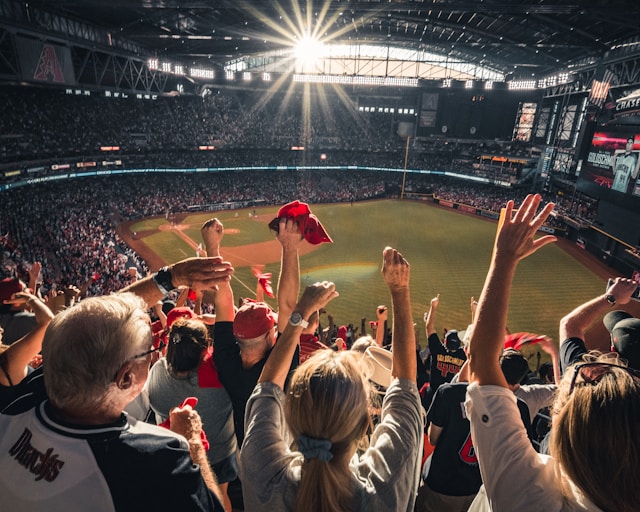
A hinchada is the larger body or crowd of supporters.
The distinction may look simple, but beginners often have several additional questions:
● Is hinchada simply the plural of hincha?
● Is a hincha more passionate than an ordinary fan?
● Is the word used only in Argentina?
● What is the difference between hinchada and barra brava?
● Why does the word also look like the verb meaning “to inflate”?
● Which Spanish fan word fits your situation? Try the 30-second selector.
This article answers those questions through explanations, examples, and conversations from a beginner’s point of view.
I saw someone write “Soy hincha de Argentina.”
Does hincha mean “fan”?
Yes.
In soccer, a hincha is an enthusiastic supporter of a team, club, country, or sometimes an individual player.
- 1 What Does Hincha Mean in Spanish?
- 2 Is Hincha Used Only for Soccer?
- 3 How to Use Ser Hincha de
- 4 How to Ask “Which Team Do You Support?”
- 5 El Hincha and La Hincha
- 6 The Plural of Hincha Is Hinchas
- 7 What Does Hinchada Mean?
- 8 La Hinchada Takes a Singular Verb
- 9 The Plural Hinchadas
- 10 Hinchas vs. Hinchada
- 11 How to Pronounce Hincha
- 12 How to Pronounce Hinchada
- 13 Why Does Hincha Also Relate to “Inflating”?
- 14 Prudencio Miguel Reyes and the Traditional Origin Story
- 15 How Hinchada Developed from Hincha
- 16 Where Are Hincha and Hinchada Used?
- 17 Which Spanish Soccer Fan Word Should You Use? 30-Second Selector
- 18 Hinchar por Meaning “To Root For”
- 19 Other Meanings of Hincha
- 20 Natural Spanish Expressions with Hincha and Hinchada
- 21 Hincha Example Sentences
- 22 Hinchada Example Sentences
- 23 Natural Soccer Conversations with Hincha
- 24 Natural Soccer Conversations with Hinchada
- 25 Common Beginner Mistakes with Hincha and Hinchada
- 26 Frequently Asked Questions About Hincha and Hinchada
- 26.1 Is hinchada the plural of hincha?
- 26.2 Can hincha refer to a woman?
- 26.3 What does soy hincha de mean?
- 26.4 How do you pronounce hincha and hinchada?
- 26.5 Is hincha used only in Argentina?
- 26.6 Where does the word hincha come from?
- 26.7 What is the difference between hincha and aficionado?
- 26.8 Should I use hinchada or afición for the whole fan base?
- 26.9 Is a hinchada the same as a barra brava?
- 27 Hincha Meaning and Hinchada Meaning: Summary
What Does Hincha Mean in Spanish?
Hincha is a noun meaning an enthusiastic supporter or fan.
It is especially common when talking about sports teams.
= fan
= supporter
= enthusiastic follower
= loyal team supporter
Soy hincha de este equipo.
I’m a supporter of this team.
Es hincha del Barcelona desde niño.
He has been a Barcelona supporter since childhood.
Ella es una hincha muy fiel.
She is a very loyal supporter.
The core image is:
A hincha does not merely know that the team exists.
The word normally suggests personal attachment, loyalty, enthusiasm, or passion.
Does hincha always mean a soccer fan?
No.
It can describe an enthusiastic supporter of another sport, a person, or a cause, but soccer is one of its strongest and most recognizable contexts.
Is Hincha Used Only for Soccer?
The dictionary meaning is broader than soccer.
A hincha can support:
● a national team
● a basketball team
● a baseball team
● an individual athlete
● an artist or public figure
● an organization or cause
Es hincha del equipo de baloncesto de su ciudad.
She supports her city’s basketball team.
Soy hincha de esa tenista.
I’m a fan of that tennis player.
However, the word has a particularly strong connection with Latin American soccer culture.
When someone says only:
Soy hincha.
listeners usually need more information about the team or person being supported.
How do I say which team I support?
Do I use de?
Yes.
The most useful pattern is ser hincha de + team.
How to Use Ser Hincha de
= to be a fan or supporter of someone
With a club name
Soy hincha de River.
I’m a River supporter.
Mi hermano es hincha de Boca.
My brother is a Boca supporter.
With an article
Somos hinchas del Atlético de Madrid.
We are Atlético de Madrid supporters.
Del combines de + el.
↓
del Barcelona
With a national team
Es hincha de la selección uruguaya.
He supports the Uruguayan national team.
With a player
Soy hincha de esa jugadora.
I’m a fan of that player.
What question can I ask to find out someone’s team?
You can ask:
¿De qué equipo eres hincha?
In areas using vos, you may hear ¿De qué equipo sos hincha?
How to Ask “Which Team Do You Support?”
General tú form
¿De qué equipo eres hincha?
Which team do you support?
Vos form
¿De qué equipo sos hincha?
Which team do you support?
The second version is especially natural in Argentina and Uruguay, where vos and sos are widely used.
= you arevos sos
= you are
Other natural questions include:
¿A qué equipo apoyas?
Which team do you support?
¿Cuál es tu equipo?
Which team is yours?
Is hincha masculine or feminine?
It can refer to either a man or a woman.
The word itself does not change. The article tells you the person’s grammatical gender.
El Hincha and La Hincha
Hincha is a common-gender noun.
= the male supporterla hincha
= the female supporter
El hincha llevaba la camiseta del club.
The male supporter was wearing the club shirt.
La hincha cantó durante todo el partido.
The female supporter sang throughout the match.
Do not change the ending to create a feminine form.
una hinchа ✓
una hincho ✗
The same spelling hincha works for both genders.
What is the plural of hincha?
Add -s:
hincha → hinchas.
The Plural of Hincha Is Hinchas
multiple supporters: los hinchas / las hinchas
Los hinchas llegaron temprano al estadio.
The supporters arrived at the stadium early.
Las hinchas prepararon una bandera enorme.
The female supporters prepared a huge flag.
Miles de hinchas celebraron la victoria.
Thousands of fans celebrated the victory.
When a mixed group is involved, traditional grammatical usage normally uses los hinchas.
Then what does hinchada mean?
Is it another plural form?
Hinchada is not the grammatical plural of hincha.
It is a separate collective noun meaning the crowd, body, or community of supporters.
What Does Hinchada Mean?
Hinchada is a feminine collective noun referring to a large group or body of supporters.
= one individual supporterhinchas
= multiple individual supporters
hinchada
= the fan base or supporter crowd as a collective group
La hinchada cantó durante noventa minutos.
The supporters sang for ninety minutes.
La hinchada recibió al equipo con banderas.
The fan base welcomed the team with flags.
The closest English translations include:
● the supporters
● the fan base
● the supporter crowd
● the team’s following
English often uses a plural expression where Spanish uses the singular collective noun hinchada.
If hinchada refers to many people, why is the verb singular?
Because the grammatical subject is one collective noun: la hinchada.
Spanish normally treats the group as one unit.
La Hinchada Takes a Singular Verb
The supporters are singing.La hinchada cantan. ✗ in standard agreement
Although the group contains many people, hinchada is grammatically singular.
La hinchada está emocionada.
The supporters are excited.
La hinchada acompaña al equipo.
The fan base supports the team.
The accompanying adjective is also feminine singular:
a loyal fan baseuna hinchada numerosa
a large fan base
una hinchada apasionada
a passionate fan base
Can hinchada have a plural?
Yes.
Hinchadas refers to two or more separate fan bases or supporter groups.
The Plural Hinchadas
multiple fan bases: las hinchadas
Las dos hinchadas llenaron el estadio.
The two sets of supporters filled the stadium.
Las hinchadas rivales entraron por accesos diferentes.
The rival fan groups entered through different entrances.
Las hinchadas sudamericanas son conocidas por sus cantos.
South American supporter groups are known for their chants.
Use hinchas when counting individual people.
Use hinchadas when comparing separate supporter communities.
So what is the clearest difference between hinchas and hinchada?
Hinchas focuses on the individual people.
Hinchada presents those people as one collective force or community.
Hinchas vs. Hinchada
| Expression | Focus | Example |
|---|---|---|
| los hinchas | Individual supporters | Three fans bought tickets. |
| la hinchada | The supporter body as one group | The fan base created a great atmosphere. |
Individual focus
Tres hinchas hablaron con la prensa.
Three supporters spoke to the press.
The sentence counts three people.
Collective focus
La hinchada presionó al equipo rival.
The home support put pressure on the opposing team.
The sentence describes the crowd as a collective presence.
many separate supportershinchada
the supporters acting or being viewed as one group
How do you pronounce hincha?
Do I pronounce the first h?
No. The Spanish letter h is silent.
Hincha is pronounced approximately “EEN-cha.”
How to Pronounce Hincha
Syllables: hin-cha
Stress: HIN-cha
Approximate pronunciation: “EEN-cha”
Important: the letter h is silent
The letters ch sound similar to the English ch in church.
approximately “een”cha
approximately “chah”
hincha
“EEN-chah”
Avoid pronouncing it like English hin-cha with an audible h.
How is hinchada pronounced?
It has three syllables:
hin-CHA-da.
The stress falls on the middle syllable.
How to Pronounce Hinchada
Syllables: hin-cha-da
Stress: hin-CHA-da
Approximate pronunciation: “een-CHA-dah”
The Spanish d between vowels may sound softer than a strong English d.
Neither hincha nor hinchada requires a written accent mark because each follows the normal Spanish stress rules.
híncha ✗hinchada ✓
hincháda ✗
Why does the word hincha look like hinchar, meaning “to inflate”?
Because the words are historically connected.
The dictionary derives hincha from hinchar, and a famous Uruguayan soccer story explains how a person who inflated balls became known as “the hincha.”
Why Does Hincha Also Relate to “Inflating”?
The Spanish verb hinchar originally means to increase the volume of something by filling it with air, gas, or another fluid.
= to inflate a ballhinchar un globo
= to inflate a balloon
The noun hincha is listed by the Real Academia Española as deriving from hinchar.
A famous story from Uruguayan soccer tradition connects this development to a ball attendant at Club Nacional de Football.
Who was the ball attendant?
Club Nacional’s official history identifies him as Prudencio Miguel Reyes.
He inflated the team’s balls and became known for loudly encouraging Nacional during matches.
Prudencio Miguel Reyes and the Traditional Origin Story
According to the official historical account maintained by Club Nacional de Football, Prudencio Miguel Reyes worked with the club in Uruguay in the early twentieth century.
One of his principal duties was inflating the balls.
= to inflate the ballsel hincha pelotas
= the person who inflated the balls
Reyes was also unusually vocal in encouraging the team.
According to the club’s traditional account, spectators asking who the loudly shouting man was received an answer equivalent to:
Es el hincha.
He’s the ball inflator.
The label gradually became associated not only with his job, but with his passionate support.
↓
Person who loudly supported the team
↓
hincha = enthusiastic team supporter
This is the best-known soccer origin story, particularly in Uruguay and around Club Nacional.
It should be understood as a traditional historical account associated with the club. The dictionary itself confirms the connection with hinchar, but does not make the full personal story part of its short etymological definition.
Did hinchada come from the same story?
According to the same traditional account, other supporters began joining Reyes’s noisy encouragement.
The growing group became known as the hinchada.
How Hinchada Developed from Hincha
The suffix -ada can help form collective or group-related nouns in Spanish.
In modern soccer usage:
one supporter+
-ada
collective group idea
↓
hinchada
the collective body of supporters
For learners, the most useful memory connection is:
A hinchada is the supporter community.
Is hincha only used in Argentina and Uruguay?
No.
The term has strong River Plate associations, but it is now understood and used much more widely across the Spanish-speaking world.
Where Are Hincha and Hinchada Used?
The historical story is associated with Uruguay, and the words are particularly prominent in the soccer cultures of Argentina and Uruguay.
However, the dictionary definition of hincha as a sports supporter is not restricted to those countries.
You may encounter the word in soccer reporting and conversation across Latin America.
● Argentina
● Uruguay
● South American soccer cultureAlso understood more broadly:
● other Latin American countries
● international Spanish-language sports media
In Spain, aficionado, seguidor, and the collective noun afición are also extremely common.
For more vocabulary connected with the River Plate variety, see this guide to Argentine slang words and expressions.
Which Spanish Soccer Fan Word Should You Use? 30-Second Selector
Spanish has several words that English may translate as fan or supporter. The best choice depends on whether you mean one person, several individuals, an entire fan community, or a specific organized group.
Answer one or two questions to get a practical default.
30-second fan-word selector
Choose what you want to describe.
Recommended expression
Why it fits:
Natural example:
Do not use it when:
Safer alternative:
Important: This tool gives a practical learner default, not an absolute rule. Regional preference, journalistic style, and the speaker’s perspective can produce overlap.
JavaScript is disabled. Use the comparison table immediately below to choose the most suitable expression.
Quick Reference: Hincha, Hinchada, Aficionado, Afición, Seguidor, Fanático, and Barra Brava
| Word | Choose it when | Avoid it when | Natural example |
|---|---|---|---|
| hincha | One person supports a specific team or side | You only mean general interest | Soy hincha de River. |
| hinchas | You are counting several individual supporters | You mean the crowd as one body | Tres hinchas compraron entradas. |
| hinchada | You mean the collective fan base, especially in Latin American soccer | You mean a specific violent subgroup | La hinchada no dejó de cantar. |
| aficionado/a | A person enjoys a sport or activity generally | Specific team identity is central | Es aficionado al fútbol. |
| afición | You mean supporters collectively, especially in Spain | You need an individual noun | La afición recibió al equipo. |
| seguidor/a | You need a broad or neutral follower/supporter term | You want strong sports-identity nuance | Es seguidor del club. |
| fanático/a | You intentionally emphasize extreme intensity | You want a neutral label | Es un fanático del fútbol. |
| barra brava | You mean a specific organized extreme supporter group | You mean ordinary fans generally | La barra brava ocupó un sector. |
several individual supporters → hinchas
fan base as one community → hinchada or afición
general enthusiast → aficionado/a
organized extreme subgroup → barra brava
Can I use the verb hinchar to mean “support a team”?
Yes, particularly in Argentina, Paraguay, and Uruguay.
You may hear hinchar por un equipo, meaning to support or root for a team.
Hinchar por Meaning “To Root For”
= to root for
= to enthusiastically support
¿Por qué equipo hinchás?
Which team do you support?
Hincho por Uruguay.
I support Uruguay.
Todos hinchaban por la selección.
Everyone was rooting for the national team.
This sports use of hinchar is regionally marked.
More broadly understood alternatives include:
to support a teamanimar a un equipo
to cheer on a team
alentar a un equipo
to encourage or support a team
A beginner can safely use ser hincha de when talking about personal allegiance.
Does hincha have any meanings outside “fan” that could confuse me?
Yes.
There is also a colloquial feminine noun meaning hostility or dislike, and some regional uses describe an annoying person or thing.
Other Meanings of Hincha
Hincha meaning hostility or dislike
The feminine noun la hincha can refer colloquially to hatred, hostility, or resentment.
Le tiene hincha desde hace años.
He has disliked him for years.
This is not the sports meaning.
Regional meaning: annoying
In some River Plate and neighboring regional usage, hincha may describe an annoying, bothersome, or inconvenient person or thing.
Context normally makes the difference clear.
a team supportertenerle hincha a alguien
to dislike or hold resentment toward someone
The article and sentence structure help distinguish the meanings.
Are hincha and hinchada safe words for a beginner to use?
Yes.
Use hincha for one supporter and hinchada for the collective fan base, and you will be understood naturally in soccer contexts.
Natural Spanish Expressions with Hincha and Hinchada
to support a team
Soy hincha de…
I’m a supporter of…
¿De qué equipo eres hincha?
Which team do you support?
¿De qué equipo sos hincha?
Which team do you support? — vos form
un hincha fiel
a loyal supporter
un hincha apasionado
a passionate supporter
los hinchas locales
the home supporters
los hinchas visitantes
the away supporters
la hinchada local
the home support
la hinchada visitante
the away support
la hinchada del club
the club’s fan base
el aliento de la hinchada
the encouragement of the supporters
una hinchada apasionada
a passionate fan base
hinchar por un equipo
to root for a team — regional
Hincha Example Sentences
Talking about team allegiance
Soy hincha de este club desde pequeño.
I have supported this club since I was young.
Mi familia entera es hincha de la selección.
My entire family supports the national team.
¿De qué equipo sos hincha?
Which team do you support?
Describing an individual fan
El hincha viajó más de mil kilómetros para ver el partido.
The supporter traveled more than a thousand kilometers to see the match.
La hincha llevaba una bandera con los colores del club.
The supporter was carrying a flag in the club’s colors.
Es uno de los hinchas más conocidos del equipo.
He is one of the team’s best-known supporters.
Describing multiple fans
Los hinchas hicieron una larga fila para comprar entradas.
The fans formed a long line to buy tickets.
Cientos de hinchas esperaron al equipo en el aeropuerto.
Hundreds of supporters waited for the team at the airport.
Hinchada Example Sentences
Describing crowd support
La hinchada alentó al equipo hasta el final.
The supporters encouraged the team until the end.
La hinchada creó un ambiente increíble.
The fan base created an incredible atmosphere.
El equipo agradeció el apoyo de la hinchada.
The team thanked the supporters for their support.
Describing chants and displays
La hinchada desplegó una bandera gigante.
The supporters unfurled a giant flag.
Los cantos de la hinchada se escuchaban fuera del estadio.
The supporters’ chants could be heard outside the stadium.
La hinchada no dejó de cantar a pesar de la derrota.
The supporters did not stop singing despite the defeat.
Comparing different supporter groups
Las dos hinchadas animaron el partido.
Both sets of supporters added energy to the match.
Las hinchadas entraron al estadio por sectores separados.
The rival supporter groups entered the stadium through separate sections.
Natural Soccer Conversations with Hincha
Asking about someone’s team
Which team do you support?B: Soy hincha de River.
I’m a River supporter.
Talking about family loyalty
Have you always supported that club?B: Sí, mi padre me llevaba al estadio cuando era niño.
Yes, my father used to take me to the stadium when I was a child.
Talking about a passionate supporter
She travels to every match.B: Sí, es una hincha muy fiel.
Yes, she is a very loyal supporter.
Natural Soccer Conversations with Hinchada
Discussing the stadium atmosphere
What an atmosphere!B: La hinchada no ha parado de cantar.
The supporters haven’t stopped singing.
After a difficult defeat
The team lost, but the people continued applauding.B: La hinchada reconoció el esfuerzo de los jugadores.
The supporters recognized the players’ effort.
Comparing the home and away support
Where are the away supporters?B: Está en la tribuna norte.
They are in the north stand.
Common Beginner Mistakes with Hincha and Hinchada
Mistake 1: Pronouncing the h
The Spanish h is silent. Pronounce hincha approximately “EEN-cha.”
Mistake 2: Creating a different feminine noun
la hincha ✓
The article changes, but the noun itself remains hincha.
Mistake 3: Using hinchada as the ordinary plural
several individual supporters: hinchas
the fan base collectively: hinchada
Mistake 4: Using a plural verb after la hinchada
Hinchada is grammatically singular, even when it refers to many people.
La hinchada canta. ✓
The fan base sings.
Mistake 5: Calling ordinary supporters a barra brava
A barra brava is a specific organized extreme group. It is not a general synonym for hinchas or hinchada.
the whole fan community → hinchada
a specific organized extreme group → barra brava
For comparisons with aficionado, afición, seguidor, and fanático, use the 30-second fan-word selector above.
Frequently Asked Questions About Hincha and Hinchada
Is hinchada the plural of hincha?
No. The grammatical plural of hincha is hinchas. Hinchada is a separate collective noun for the supporter community or crowd.
Can hincha refer to a woman?
Yes. Say el hincha for a male supporter and la hincha for a female supporter. The noun itself does not change.
What does soy hincha de mean?
Soy hincha de… means “I support…” or “I’m a fan of…,” followed by a team, country, or person.
How do you pronounce hincha and hinchada?
The Spanish h is silent. Pronounce hincha approximately “EEN-cha,” with stress on the first syllable. Pronounce hinchada in three syllables, with stress on the middle syllable: hin-CHA-da.
Is hincha used only in Argentina?
No. The word has strong associations with Argentina, Uruguay, and South American soccer, but it is understood more broadly in Spanish-language sports.
Where does the word hincha come from?
The dictionary derives hincha from hinchar, meaning “to inflate.” A well-known Club Nacional tradition connects the soccer meaning with Prudencio Miguel Reyes, who inflated the club’s balls and loudly supported the team.
What is the difference between hincha and aficionado?
Hincha normally emphasizes loyalty to a particular team. Aficionado is broader and may simply describe someone who enjoys a sport, activity, or performance.
Should I use hinchada or afición for the whole fan base?
Both can describe supporters collectively. Hinchada is strongly associated with Latin American soccer, while afición is especially frequent in Spain and Spanish sports reporting.
Is a hinchada the same as a barra brava?
No. A hinchada can mean the entire fan base. A barra brava is a specific organized group of extreme supporters associated with violence.
Hincha, Hinchas, Hinchada, or Barra Brava?
Spanish soccer fandom has several words for “fan.” Answer two quick questions to find the one that fits what you actually mean.
Broad enjoyment of a sport or activity, not team-specific identity.
El hincha or la hincha — the noun itself does not change for gender.
Simple plural: tres hinchas compraron entradas.
Feminine collective noun, always takes a singular verb: la hinchada canta.
Not a general synonym for fans — refers to an organized group, sometimes linked to violence.
※ This is a practical learner default, not an absolute rule — regional usage and journalistic style can overlap.
Hincha Meaning and Hinchada Meaning: Summary
= one fan or supporter
= an enthusiastic supporter of a team● Gender
el hincha = male supporter
la hincha = female supporter
● Plural
hinchas
● hinchada
= the fan base or supporter crowd collectively
= feminine singular collective noun
● Plural of hinchada
hinchadas
= separate fan bases or supporter groups
● Pronunciation
hincha = approximately “EEN-cha”
hinchada = hin-CHA-da
● Useful pattern
ser hincha de + team
= to support a team
● Core image
A hincha is one emotionally committed supporter; a hinchada is the collective force created by the supporters.
● Origin
hincha is connected with the verb hinchar, “to inflate”
the famous Uruguayan tradition links the sports meaning with ball inflator and supporter Prudencio Miguel Reyes
● Important distinction
hinchada = the general fan base
barra brava = a specific organized group associated with violence
The easiest way to remember these words is to begin with number and perspective.
A hincha is one person who supports the team.
Hinchas are multiple individual supporters.
The hinchada is what those supporters become when they sing, celebrate, and support the team as one collective group.
Once you remember that distinction, you can understand many Spanish soccer reports and conversations much more naturally.
Real Academia Española and ASALE: Diccionario de la lengua española — hinchada
Real Academia Española and ASALE: Diccionario de la lengua española — hinchar
Real Academia Española and ASALE: Diccionario de la lengua española — aficionado
Real Academia Española and ASALE: Diccionario de la lengua española — afición
Real Academia Española and ASALE: Diccionario de la lengua española — barra and barra brava
Club Nacional de Football: El Primer Hincha y la Primera Hinchada